❖ Definition: Compounds having same molecular formula but different physical or chemical properties are called isomers.
❖ Term given by: Berzelius.
❖ Cause: Different properties arise due to different arrangement of atoms or groups.
▢ Basic Concept:
❖ Isomers: Two or more compounds having same molecular formula but different properties.
❖ Isomerism: The phenomenon of existence of isomers.
❖ Example:
◉ Molecular Formula: C2H6O
◉ Isomers:
Ethyl alcohol: CH3CH2OH
Dimethyl ether: CH3OCH3
◉ Reason: Both have same molecular formula but different physical and chemical properties.
▢ Structural Isomerism:
❖ Definition: Isomerism due to different arrangement of atoms or groups within the molecule without reference to space.
❖ Types:
◉ Chain Isomerism:
◈ Definition: Isomerism due to different carbon skeletons.
◈ Other Names:
Skeletal isomerism
Nuclear isomerism
◈ Condition: Functional group must be same.
◈ Homologous Series: Chain isomers belong to the same homologous series.
◈ Examples:
■ C4H10:
n-Butane: CH3–CH2–CH2–CH3
Isobutane: (CH3)3CH
■ C5H12:
n-Pentane
Isopentane
Neopentane
■ Alkene Example:
1-Butene: CH3–CH2–CH=CH2
Isobutene: CH2=C(CH3)2
◈ Special Point:
■ Wrong Chain Isomer Example:
CH3–CH2–CH2–CHO
CH3–CO–CH(CH3)2
■ Explanation: These are not chain isomers because their functional groups are different. Aldehyde and ketone are functional isomers.
◈ Minimum Carbon Atoms:
■ Alkane: 4
■ Alkene: 4
■ Alkyne: 5
■ Alcohol: 4
◉ Position Isomerism:
◈ Definition: Isomerism due to different position of multiple bond, substituent or functional group in the same carbon chain.
◈ Examples:
■ Alkene:
But-1-ene: CH3–CH2–CH=CH2
But-2-ene: CH3–CH=CH–CH3
■ Alkyne:
But-1-yne: CH3–CH2–C≡CH
But-2-yne: CH3–C≡C–CH3
■ Aromatic:
o-Xylene
m-Xylene
p-Xylene
■ Ketone:
Pentan-2-one
Pentan-3-one
■ Alcohol:
n-Propyl alcohol
Isopropyl alcohol
■ Dihalide:
1,1-Dichloroethane
1,2-Dichloroethane
◈ Minimum Carbon Atoms:
■ Alkane: 6
■ Alkene: 4
■ Alkyne: 4
■ Alcohol: 3
◈ Do Not Show Position Isomerism:
Aldehydes
Carboxylic acids
Cyanides
◉ Functional Isomerism:
◈ Definition: Isomerism due to different functional groups in compounds having the same molecular formula.
◈ Functional Isomeric Pairs:
■ Alcohol and Ether:
● General Formula: CnH2n+2O
● Example:
Ethanol: CH3CH2OH
Methoxymethane: CH3OCH3
■ Aldehyde and Ketone:
● General Formula: CnH2nO
● Example:
Propanal
Propanone
■ Primary, Secondary and Tertiary Amines:
● General Formula: CnH2n+3N
● Example:
Propan-1-amine
N-methylethanamine
N,N-dimethylmethanamine
■ Carboxylic Acid and Ester:
● General Formula: CnH2nO2
● Example:
Ethanoic acid
Methyl methanoate
■ Cyanide and Isocyanide:
● General Formula: CnH2n+1CN
● Example:
Methyl cyanide: CH3CN
Methyl isocyanide: CH3NC
■ Nitro and Nitrite:
● General Formula: CnH2n+1NO2
● Example:
Nitromethane
Methyl nitrite
■ Alkene and Cycloalkane:
● General Formula: CnH2n
● Example:
Propene
Cyclopropane
■ Alkyne, Cycloalkene and Alkadiene:
● General Formula: CnH2n−2
● Example:
Propyne
Cyclopropene
Propadiene
■ Benzyl Alcohol and Anisole:
● Example:
Benzyl alcohol
Anisole
◈ Do Not Show:
Alkyl halides do not show functional isomerism.
◉ Ring-chain Isomerism:
◈ Definition: Isomerism due to different mode of linking of carbon atoms: open chain and closed chain.
◈ Examples:
■ C3H6:
Propene
Cyclopropane
■ General Pairs:
Alkene and cycloalkane
Alkyne and cycloalkene
◈ Priority: Ring-chain isomers are also functional isomers, but priority is given to ring-chain isomerism.
◉ Metamerism:
◈ Definition: Isomerism due to different arrangement of alkyl groups around polyvalent functional group or atom.
◈ Polyvalent Functional Group: Functional group having two or more free valencies.
◈ Common In:
Ethers
Thioethers
Ketones
Secondary amines
Tertiary amines
Esters
◈ Features:
Metamers belong to the same homologous series.
Metamers can also be position or chain isomers, but priority is given to metamerism.
◈ Example:
■ Molecular Formula: C4H10O
■ Metamers:
Ethoxyethane
1-Methoxypropane
2-Methoxypropane
◉ Tautomerism:
◈ Definition: Special type of functional isomerism involving migration of acidic hydrogen from one polyvalent atom to another with rearrangement of covalent bonds.
◈ Other Names:
Desmotropism
Kryptomerism
Allelotorpism
Dynamic isomerism
◈ Term Given By: Laar in 1885
◈ Nature:
Tautomers are true isomers.
Tautomers may be isolated.
Tautomers are interconvertible.
Tautomers exist in dynamic equilibrium.
◈ Types:
■ Dyad System:
● Definition: Migration of hydrogen between two polyvalent atoms.
● Example:
Hydrogen cyanide
Hydrogen isocyanide
■ Triad System:
● Definition: Migration of proton from 1st atom to 3rd atom.
● Example: Keto-enol tautomerism
◈ Conditions:
Compound must have electron withdrawing group.
Compound must have at least one α-hydrogen.
◈ Electron Withdrawing Groups:
>C=O
–NO2
–C≡N
–NO
◈ Keto-enol Tautomerism:
■ Keto Form: Form containing keto or oxo group.
■ Enol Form: Form containing alkene and alcohol group.
■ Enolisation: Conversion of keto form into enol form.
■ Catalyst:
Acid
Alkali
■ Labile Form: Less stable tautomeric form.
■ Examples with Percentage:
● Acetaldehyde:
⟣ Keto Form: Almost 100%
⟣ Enol Form: Only traces
● Acetone:
⟣ Keto Form: 99%
⟣ Enol Form: 0.25%
● Cyclohexanone:
⟣ Keto Form: 98.8%
⟣ Enol Form: Traces
● Acetoacetic Ester:
⟣ Keto Form: 93%
⟣ Enol Form: 7%
● Acetylacetone:
⟣ Keto Form: 24%
⟣ Enol Form: 76%
■ Active Methylene Group:
● Definition: –CH2– group present between two carbonyl groups.
● Importance: Compounds having active methylene group show higher enol content.
◈ Nitro-acinitro Tautomerism:
■ Condition: Nitro group should be attached to 1° or 2° carbon and should have α-hydrogen.
■ Do Not Show: Tertiary nitroalkanes do not show tautomerism because they have no α-hydrogen.
◈ Nitroso-oxime Tautomerism:
■ Definition: One tautomer exists as nitroso form and the other as oxime form.
◈ Other Compounds Showing Tautomerism:
Urea
Thiourea
Nitrosophenol
▢ Tautomerism and Resonance:
❖ Differences:
◉ Nature:
◈ Tautomerism: Tautomers are definite compounds.
◈ Resonance: Resonating structures are imaginary.
◉ Separation:
◈ Tautomerism: Tautomers can be separated by suitable methods.
◈ Resonance: Resonance structures cannot be separated.
◉ Change:
◈ Tautomerism: Involves migration of mobile hydrogen atom.
◈ Resonance: Involves shifting of π-electrons or lone pairs.
◉ Atomic Arrangement:
◈ Tautomerism: Atomic arrangement differs.
◈ Resonance: Atomic arrangement remains same.
◉ Equilibrium:
◈ Tautomerism: Dynamic equilibrium exists.
◈ Resonance: No real equilibrium exists.
◉ Functional Group:
◈ Tautomerism: Different tautomers may have different functional groups.
◈ Resonance: Resonance structures have same functional group.
◉ Stability:
◈ Tautomerism: Does not mainly stabilize molecule.
◈ Resonance: Stabilizes molecule by lowering internal energy.
◉ Planarity:
◈ Tautomerism: Can occur in planar or non-planar molecules.
◈ Resonance: Occurs mainly in planar molecules.
▢ Stereoisomerism:
❖ Definition: Isomerism due to different arrangement of atoms or groups in space.
❖ Other Name: Space isomerism
❖ Feature: Stereoisomers have same structural formula but different configuration.
❖ Types:
◉ Configurational Isomerism:
◈ Definition: Stereoisomerism in which interconversion requires breaking of bonds.
◈ Types:
■ Geometrical Isomerism:
■ Optical Isomerism:
◉ Conformational Isomerism:
◈ Definition: Stereoisomerism due to different spatial arrangements produced by rotation around single bond.
▢ CEE High Yield Points:
Chain isomerism
Alkanes show chain isomerism from C4.
Position isomerism
Alkanes show position isomerism from C6.
Alcohol
Alcohol shows position isomerism from C3.
No position isomerism
Aldehydes, carboxylic acids and cyanides do not show position isomerism.
Ring-chain priority
Ring-chain isomers may also be functional isomers, but priority is given to ring-chain.
Metamerism priority
Metamers may also be position or chain isomers, but priority is given to metamerism.
Tautomerism condition
Electron withdrawing group and α-hydrogen are required.
No α-hydrogen
No tautomerism.
Active methylene
β-dicarbonyl compounds show high enol content.
Q1.
Isomers of propionic acid are
Q2.
Ethoxyethane and methoxypropane are
Q3.
An isomer of ethanol is
📅MOE 2009•IOM 2010
Q4.
Dimethyl ether and ethyl alcohol are
Q5.
2-Pentene and 1-pentene are isomers
Q6.
Number of isomeric forms of C7H9N having benzene ring will be
Q7.
Which of the following will show metamerism?
Q8.
How many structural formula are possible for C₅H₁₁Cl?
Q9.
The number of isomers for the aromatic compounds of the formula C₇H₈O is
Q10.
How many isomers of C₅H₁₁OH will be primary alcohols?
Q11.
The number of ether metamers represented by the formula C₄H₁₀O is
Q12.
The number of possible alcoholic isomers for C₄H₁₀O are
Q13.
The total number of structural isomers for the compounds of the formula C₄H₁₀ are
Q14.
How many geminal dihalides with different formula are possible for C3H6Cl2?
Q15.
The enolic form of acetone contains
Q16.
In what respect propene and 2-butene are similar?
Q17.
The compounds (CH₃)₃N & CH₃CH₂CH₂NH₂ represent
Q18.
Which of the following compound will show tautomerism?
Q19.
In the keto-enol tautomerism of dicarbonyl compounds, the enol form is preferred in contrast to the keto form, this is due to
Q20.
Glucose and fructose are
Q21.
Number of isomeric primary amines of molecular formula C₄H₁₁N is
Q22.
The type of isomerism observed in urea molecule is
Q23.
The least number of carbon atoms in alkane forming conformational isomers is
Q24.
The least number of carbon atoms in alkane forming structural isomers is
Q25.
The property by which a substance has the same molecular formula but different structure is
Q26.
The number of dichlorinated isomers that can be formed by halogenations of CH₃CH₂CH₃ is
Q27.
1-Bromobutane and 2-Bromobutane are .... isomers
Q28.
The compound n-butyl alcohol and isobutyl alcohol are
Q29.
n-Propyl alcohol and isopropyl alcohols are examples of
Q30.
The number of isomeric aldehydes and ketones with formula C₅H₁₀O are
Q31.
Tautomerism is also called
Q32.
The type of isomerism shown by nitromethane is
Q33.
Which of the following class of compounds cannot show metamerism?
Q34.
HCN and HNC are
Q35.
Cyanides and isocyanides are isomers of the type
Q36.
The total number of possible isomeric trimethylbenzene is
Q37.
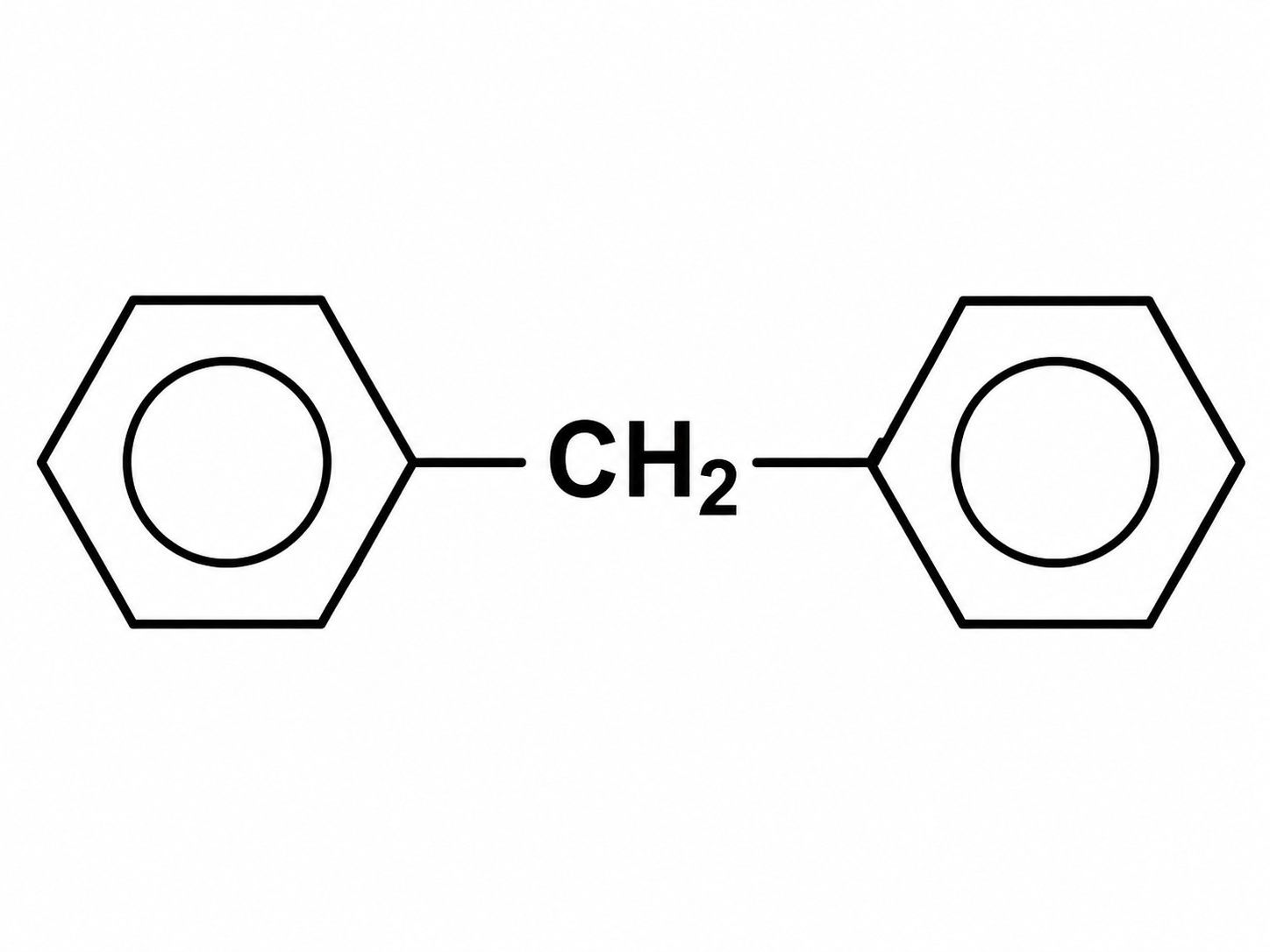
▢ _null: The molecular formula of diphenylmethane. How many structural isomers are possible when one of the hydrogen atom is replaced by a chlorine atom?
Q38.
Of the five isomeric hexanes, the isomer which can give two monochlorinated compounds is
Q39.
Only two isomeric monochloro derivatives are possible for
Q40.
The total number of isomeric carbocations possible for the formula C₄H₉⁺ is
Q41.
Including cyclic structures, how many structural isomers are possible for the formula C₄H₈?
Q42.
The total number of structural isomers possible for structure C₃H₆ are
Q43.
The compound n-butyl alcohol and isobutyl alcohol are
Q44.
One among the following pairs of compounds is not a pair of isomers
Q45.
The number of isomeric aldehydes and ketones with formula C₅H₁₀O are
Q46.
Which of the following is not an isomer of butanal?
Q47.
Monocarboxylic acids are isomeric with
Q48.
Which of the following is not an isomer of CH₃CH₂CH₂CH₂OH?
Q49.
Which of the following isomerism is shown by ethyl acetoacetate?
Q50.
Which of the following statement is incorrect?
Q51.
Which of the following contains secondary butyl and tertiary butyl group?
📚
ADDITIONAL QUESTIONS
Q1.
Geometrical Isomerism is exhibited by
Q2.
Which of the following will show geometrical isomerism?
Q3.
Which among the following is likely to show geometrical isomerism?
Q4.
Geometrical isomerism is caused by
Q5.
The lowest alkene which can exhibit geometrical isomerism is
Q6.
Geometrical isomerism is possible in
Q7.
Which of the following compounds exhibit geometrical isomerism?
Q8.
Which of the following exhibit geometrical isomerism?
Q9.
Optical activity is measured by
📅IOM 2007
Q10.
Which is the chiral molecule?
Q11.
Which of the following will show optical isomerism?
Q12.
How many optically active stereoisomers are possible for butane-2,3-diol?
📅I.E.
Q13.
Which of the following compounds exhibits stereoisomerism?
Q14.
Which shows chirality?
📅I.E. 2011
Q15.
The property by virtue of which a compound can turn the plane polarised light is known as
Q16.
Rotation of plane polarised light can be measured by
Q17.
Which can exist in optically active form?
Q18.
The lowest alkene which is capable of exhibiting enantiomerism must have
Q19.
The instrument which can be used to measure optical activity i.e., specific rotation is
Q20.
Which of the following compound could be optically active?
Q21.
Racemic mixture is optically inactive due to
Q22.
How many chiral carbons are present in glucose molecule CHO(CHOH)₄CH₂OH?
Q23.
The process of converting D-form to L-form or vice versa is known as
Q24.
Which of the following compounds exhibit enantiomerism?
Q25.
Which one of the following compounds will not exhibit optical isomerism?