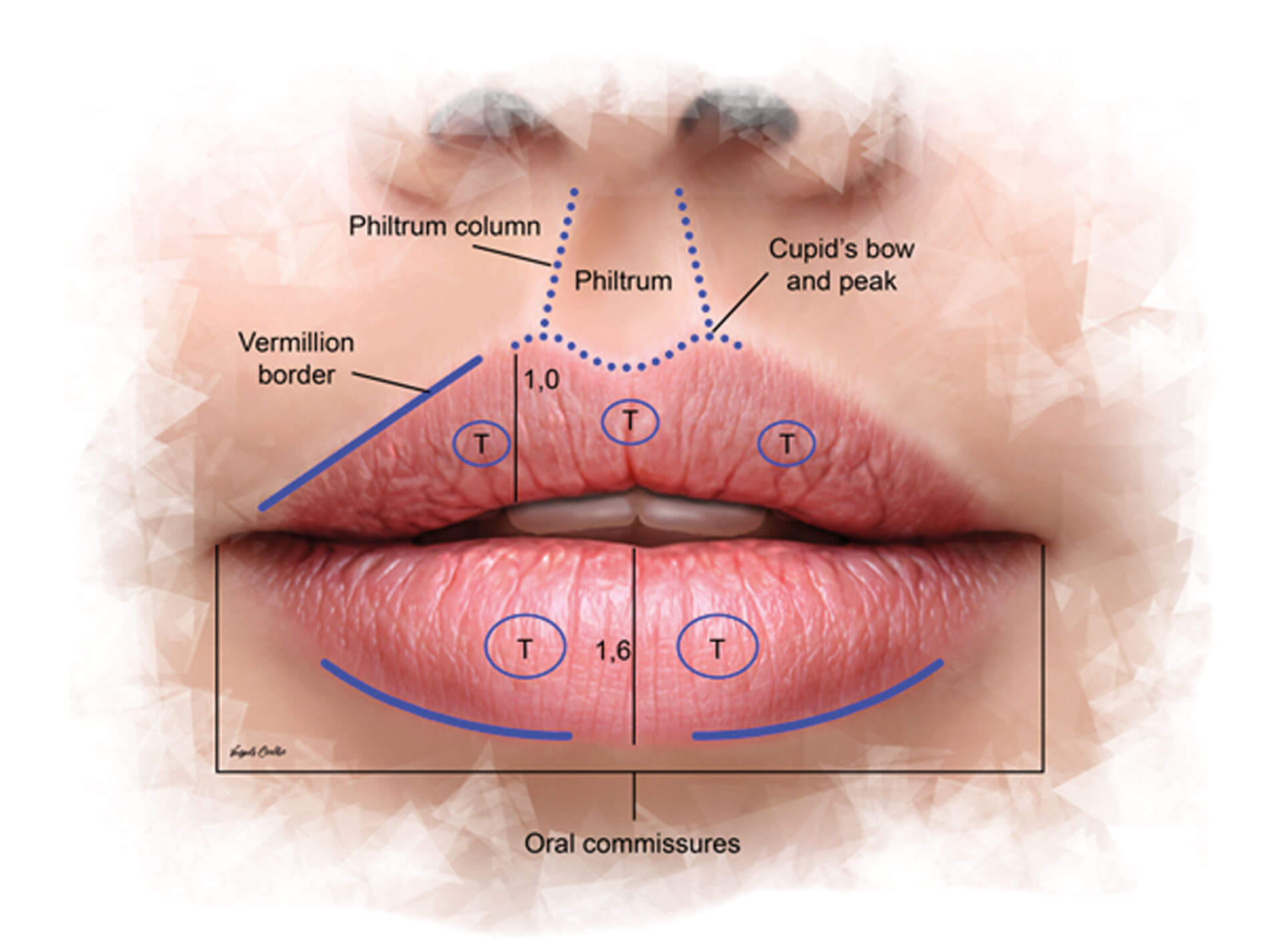
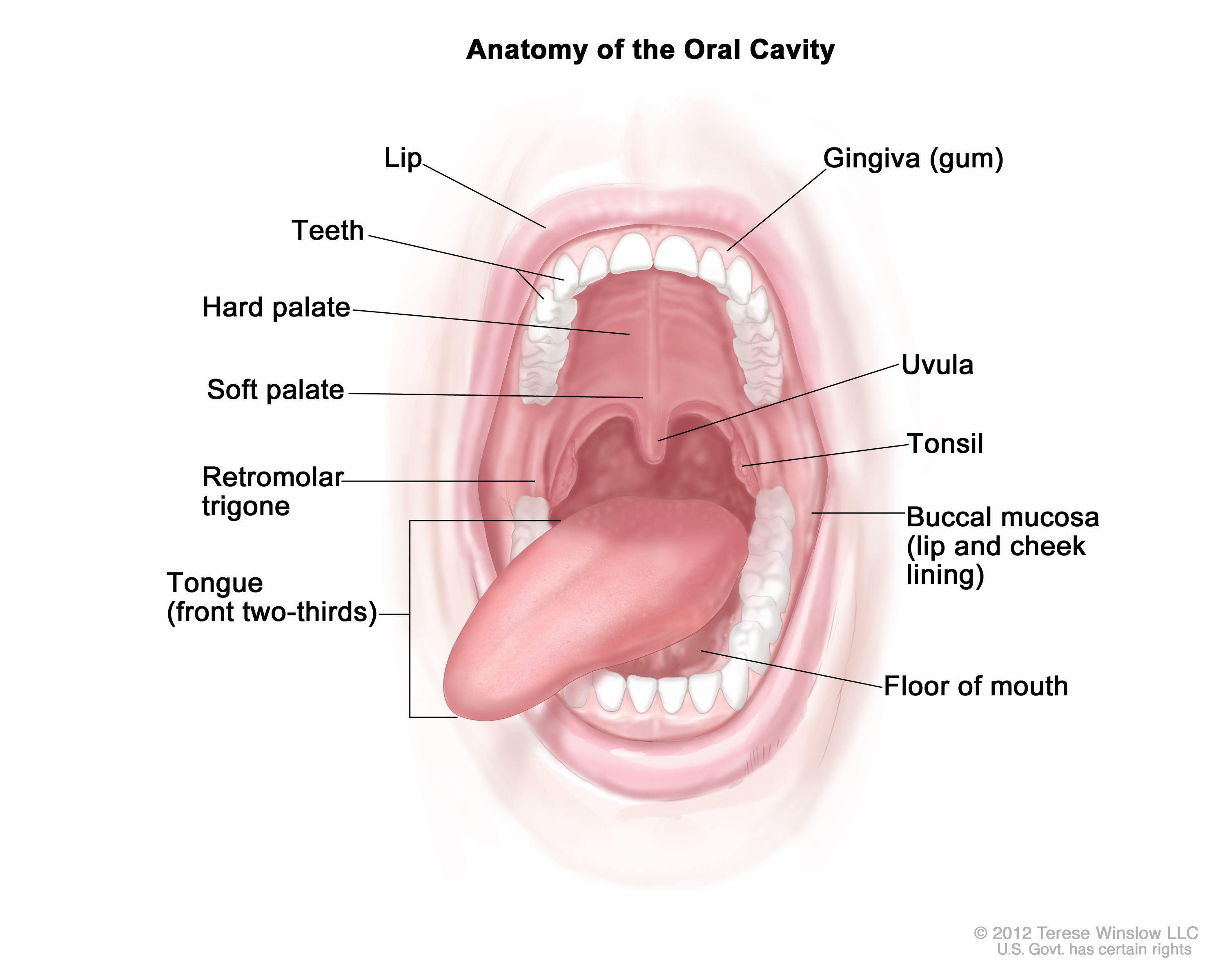
▢ Vestibule: Space between the lips, cheeks, gums and teeth.
▢ Oral cavity proper/ Buccal cavity:
❖ Lining: Stratified Squamous epithelium
❖ Roof:
◉ Palate:
◈ Hard palate:
◈ Soft palate:
■ Uvula/ Velum:
Posterior hanging part of soft palat.
Moves upward during swallowing.
❖ Floor:
◉ Teeth:
◉ Tongue:
❖ Posterior side:
◉ Tonsils:
◈ Pharngeal/ Adenoid tonsil:
◈ Lingual tonsil:
◈ Palatine tonsil:
Note
Tonsils are lymphoid organs.
They are arranged in ring like pattern called as Waldeyer's ring.
▢ Oesophagus:
▢ Stomach:
▢ Cardiac part:
❖ Fundus:
❖ Body:
▢ Pyloric part:
❖ Pyloric canal:
❖ Pyloric antrum:
▢ Small intestine:
▢ Duodenum:
▢ Jejunum:
▢ Ileum:
▢ Appendix:
▢ Large intestine:
❖ Colon:
▢ Ascending colon:
▢ Transverse colon:
▢ Descending colon:
▢ Sigmoid colon:
▢ Rectum:
▢ Anus:
📖
Accessory organs
📝
Teeth
▢ Study of teeth: Dentistry or Odontology
▢ Origin of teeth:
❖ Ecto-mesodermal:
Enamel &rarr Ectoderm
Rest &rarr Mesoderm
▢ Parts of teeth:
❖ Crown: Projecting above the gum.
❖ Neck: Between the crown and root.
❖ Root: Embedded in the jaw beneath the gum.
▢ Structure of teeth:
❖ Enamel:
White and shining part of teeth
Hardest substance of Human body due to present of Fluorine
Richest in calcium salt.
Produced by ameloblast or amyloblast.
❖ Dentine:
Hardest tissue of human body.
Produced by odontoblast.
❖ Pulp cavity:
Cavity of teeth.
Filled with connective tissue, blood vessels, nerves and lymphatics.
Lined by odontoblast.
❖ Cementum:
Present between teeth and gums.
❖ Periodontal membrane:
Holds the root in socket.
▢ Types of teeth:
❖ On the basis of Shape:
Name of teeth
Number in each quadrant
Uses
Special
Incisor
2
Cutting and shearing food
Tusks of Elephant is Modified Incisor.
Canine
1
Gripping and tearing food
More developed in carnivores
Tusks of walrus is modified canines.
Premolar
2
Crushing and grinding food
Molar
3
Crushing and grinding food
The third molars appear very late, are non-functional in human and are called Wisdom teeth.
◉ notes:
Frangs of snakes are modified maxillary teeth.
❖ On the basis of Appearance in life:
Name of teeth
Appearance
Examples
Monophyodont
Once in life
Premolar and last molar of man
Diphyodont
Twice in life
Incisor
Canines
Molar
Polyphyodont
Many times in life
Fish
Amphibians
❖ On the basis of Position in Jaw:
Name of teeth
Position in Jaw
Examples
Thecodont
In Bony socket
Man
Crocodile
Pleurodont
On the lateral side of Jaw bone
Reptile
Acrodont
On the terminal part of Jaw bone
Fish
Amphibians
❖ On the basis of Structure and Function:
Name of teeth
Appearance
Examples
Heterodont
Different types
Mammal
Diphyodont
All teeth same type
Incisor
❖ On the basis of Crown:
Name of teeth
Characteristic
Examples
Secodont
Canine teeth become long and pointed and bend backwards.
Canine teeth of carnivorous animals
Hypsodont
Crown part is large and root is small or absent.
Incisor
Canines
Brachyodont (Cheek teeth)
Crown part is small and root is long.
Premolar
Molar
❖ On the basis of Lophs:
Name of teeth
Lophs shape
Examples
Lophodont
Large
Wide
Flat
Rabbit
Elephant
Bunodont
Small
Spherical
Humans
Solenodont
Large
Semilunar
Ruminant animal
Carnessial
Long
Pointed
Carnivorous animals
▢ Dental formula:
❖ Milk/temporary teeth in man:
◉ Dental formula: \(\frac{2102}{2102}\)
❖ Permanent teeth in man:
◉ Dental formula: \(\frac{2123}{2123}\)
❖ Teeth in rabbit:
◉ Dental formula: \(\frac{2033}{1023}\)
📝
Tongue
▢ Parts:
❖ Papillary part:
◉ Location: Anterior 2/3 part of the tongue
◉ Papillae:
◈ Circumvalate papillae/ Valate papillae:
Largest papillae.
Least in number.
◈ Fungiform papillae:
Mushroom shaped.
◈ Filliform papillae:
Thread like.
Taste buds are absent.
◈ Foliate papillae:
Vestigial in human.
❖ Pharyngeal part:
Posterior 1/3 part of the tongue.
▢ Taste areas:
Salt and sweet &rarr Tip
Sour &rarr Side
Bitter &rarr Back
Umami &rarr Taste of meat
📖
Digestive glands
📝
Salivary glands
Salivary glands
No.
Ducts
Location
Features
Parotid gland
1 pair
Stenson's duct
Beneath ears
Largest salivary gland
Compound tubulo-acinar gland
Mumps is a viral disease by Paramyxovirus causing painful inflammation of parotid glands.
Sublingual gland
1 pair
Duct of Rivinus or Duct of Bartholin
Beneath tongue
Smallest salivary gland
Compound acinar gland
Submaxillary gland or Submandibular gland
1 pair
Wharton's duct
Jaw angles
Compound acinar gland
Infraorbital gland or Zygomatic gland
1 pair
Beneath eye orbits
Not in man, found in Rabbit
📚
PHYSIOLOGY OF DIGESTIVE SYSTEM
📖
Control of digestive system
▢ Neural control:
▢ Hormonal control:
📖
Digestion process
▢ Digestion of Carbohydrates:
▢ Digestion of Fats:
▢ Digestion of Proteins:
📖
Absorption process
▢ Absorption of Carbohydrates and Proteins:
▢ Absorption of Fats:
📚
NUTRITION
📖
Energy giving food
▢ Carbohydrates:
▢ Fats:
📖
Body building food
▢ Proteins:
📖
Protective food
▢ Vitamins:
▢ Minerals:
📖
Dietary fibres
📖
Water
Q1.
Micelles are the bodies related to?
📅2069
Q2.
Movements of circular muscles in stomach is called?
📅2010
Q3.
Bruner's gland in the mammalian gut are present in the submucosa of?
📅2010
Q4.
Dental formula for permanent teeth is?
📅2012
Q5.
Paneth cells are present in?
📅2013
Q6.
A condition when the blood glucose level exceeds its normal value is called
📅KU 2012
Q7.
Which of the following enzymes is not proteinaceous in nature?
📅KU 2012
Q8.
Wharton's gland is :
📅BPKIHS 2012
Q9.
The sodium absorption in intestine is mainly by the process of
Q10.
Water is absorbed mainly from
📅BPKIHS 2012•IOM 1996•IOM 1998
Q11.
Which of the following salivary glands is located at the base of the tongue?
📅IE 2012
Q12.
Hardest substance in human body is:
📅IOM-2008
Q13.
Which one of the following statements is correct?
📅KU 2012
Q14.
Aluminium salts cause
📅BPKIHS 2012
Q15.
The chylomicron during digestion of fat contains
📅MOE - 2008
Q16.
Liver of frog consists of:
📅IOM-2006
Q17.
Which of the following is not the function of liver?
📅IOM 2005
Q18.
Iron is absorbed from:
📅IOM-2004
Q19.
Dentition in frog is:
📅IOM-2004
Q20.
Which enzyme is not found in carnivore:
📅IOM 2012
Q21.
Which part is not found in frog stomach:
📅IOM 2012
Q22.
Major function of bile in case of frog is:
📅MOE 2069
Q23.
Jaundice is caused by
📅IOM-2004
Q24.
Which of the following teeth is nonfunctional in human beings?
📅IOM-2003
Q25.
Most of the drugs are metabolized in
📅IOM 1993•IOM 2003
Q26.
Small peptides are absorbed and digested to free amino acids in:
📅BPKIHS-2003
Q27.
The human vermiform appendix is an extension of :
📅BPKIHS-2003
Q28.
Stool formed as solid waste produce is accumulated in large intestine. The organ known as reservoir of stool is
📅IOM 1997
Q29.
Which of the following is not the part of large gut?
📅IOM -2002
Q30.
Sphincter is not present between
📅MOE-2002
Q31.
Glucagon is present in:
📅IOM
Q32.
Dental formula of 13 years youth is
📅BPKIHS-2000
Q33.
Which of the following embryo has parasitic mode of nutrition?
📅IOM 2002
Q34.
Lacteals, which are related to fat absorption are
📅BPKIHS-2000
Q35.
We eat butter. The end product of butter to be absorbed by the body is
📅MOE 2055
Q36.
Movement of food in the intestine is by
📅MOE-2054
Q37.
The number of salivary glands in rabbit is
📅MOE 2053
Q38.
Secretin is secreted by the
📅BPKIHS-1995
Q39.
The largest variety of digestive enzymes is found in the
📅BPKIHS-1999
Q40.
Glucose is absorbed from the intestine by the process
Q41.
Most fat digestion occurs in which part of the tract?
📅IOM -1996
Q42.
The substance or food which is not metabolized/ digested in the human body is
📅IOM 1994,1995
Q43.
Peristalsis occurs in all expect
📅IOM -1995
Q44.
The simplest form of fat digestion is
📅IOM-1994
Q45.
Complete food digestion ends at
📅IOM -1994
Q46.
E. coli is the normal flora of
📅IOM 1994,1995
Q47.
Gastric acid secretion is stimulated by:
📅IOM 1993
Q48.
Tonsil is a
📅IOM -1992
Q49.
The permanent teeth get erupted first is:
📅BPKIHS 2016
Q50.
Scurvy and bleeding of gums is due to deficiency of:
📅BPKIHS 2016
Q51.
Number of premolars in human:
📅BPKIHS 2015
Q52.
The orifice found in between oesophagus and stomach is:
📅BPKIHS 2015
Q53.
Bruner's glands are related to
📅MOE 2014
Q54.
Active secretary cell in human body are:
📅MOE 2012
Q55.
Micells are the bodies related to:
📅MOE 2012
Q56.
Pyloric sphincter is present between
📅KU 2015
Q57.
The absorption of glycerol, fatty acids and monoglycerides take place by the
📅KU 2015
Q58.
Succus entericus is secreted by:
📅IOM 2014
Q59.
Pernicious anaemia is caused due to deficiency of:
📅IOM 2014
Q60.
In man, nodules of lymphoid tissue (Payer's patches) are found in:
📅IOE 2013
Q61.
Pancreatic juice contains :
📅IOM 2015
Q62.
Taste buds for bitter taste are found in our tongue at:
📅IOM 2015
Q63.
The process in which ammonia is converted to urea in the liver by combining with carbon is called
📅IOM 2015
Q64.
Deficiency of which substance causes pellagra?
📅IOM 2015
Q65.
Which of the following salivary gland is absent in human beings?
📅IOM 2016
Q66.
Pancreatic juice is secreted by:
📅IOM 2016
Q67.
Semi digested food entering into the duodenum is called
📅IOM-2016
Q68.
In mammals, maximum absorption of which of the following takes place in ileum?
📅KU-2014
📚
GRB QUESTIONS
Q1.
The largest gland in human body is: (JKCMEE 2003; BV Pune 2004; BHU 2006; CPMT 2008)
Q2.
Cellulose digestion in rabbit, cows and other herbivorous mammals with the help of bacteria occurs in: (AFMC 2005)
Q3.
The wave-like contraction of the smooth muscles of digestive tract is called: (CMC, Vellore 2003)
Q4.
Oxyntic cells are located in: (Manipal 2006; DPMT 2006; WB-JEE 2010)
Q5.
Crypts of Lieberkuhn secrete: (MPPMT 2006; Karnataka CET 2010)
Q6.
Intestinal villi are mainly concerned with:
Q7.
Stomach is the site of digestion mainly of: (WB-JEE 2006)
Q8.
The structure which prevents entry of food into windpipe during swallowing in mammals is:
Q9.
Brunner's glands are found in: (Kerala PMT 2001; PCS 2004; VMMC-Safdarjung 2008; AFMC 2010)
Q10.
Rennin is present in:
Q11.
If live percentage of which will increase
Q12.
Taste buds of bitter taste are located on our tongue:
Q13.
Peyer's patches of ileum produce:
Q14.
One of the following is an important specific function of the liver. Mark the correct one:
Q15.
In which layer of stomach are gastric glands located? (Gujarat CET 2008)
Q16.
Cardiac glands are present in:
Q17.
Succus entericus is: (JCECE 2008)
Q18.
The conversion of dangerous nitrogenous wastes into less toxic excretory products is carried out in: (JKCMEE 2009)
Q19.
The epithelial cells lining the stomach of vertebrates are protected from the damage by HCl because: (Manipal 2006)
Q20.
Man cannot digest cellulose, whereas cow and other herbivores can because:
Q21.
The number of salivary glands present in human beings is:
Q22.
Wharton's duct is associated with:
Q23.
Fermentation chamber of herbivores is: (JCECE 2003)
Q24.
Depression between intestinal villi of rabbit are called:
Q25.
In an empty contracted stomach, the mucosa is thrown into folds known as: (Kerala PMT 2011)
Q26.
Brunner's glands are confined to:
Q27.
The duct from parotid gland that opens into the vestibule is called:
Q28.
Parotid glands are located below: (JKCMEE 2006)
Q29.
The valve in between the oesophagus and the stomach is called:
Q30.
Paneth cells are found in:
Q31.
Peyer's patches are:
Q32.
The lacteals are found in: (Karnataka CET 2004)
Q33.
In man, the length of alimentary canal is:
Q34.
Peristalsis is:
Q35.
Ductus choledocus carries: (PCS 2001)
Q36.
The true stomach of a ruminant is represented by: (JIPMER 2004; AMU 2011)
Q37.
The food that enters intestine from stomach is called: (AFMC 2009)
Q38.
In grazing cattle, the major portion of food, cellulose is:
Q39.
Amount of saliva secreted daily in humans is about: (Odisha JEE 2004)
Q40.
Pancreatic duct is known as:
Q41.
Largest salivary gland is:
Q42.
Liver of man is:
Q43.
Cystic duct arises from:
Q44.
Taste buds are absent in: (RPMT 2002)
Q45.
Dental formula of adult man is: (MPPMT 2001; Kerala PMT 2002; Odisha JEE 2004; DPMT 2005, 06; BCECE 2005; HPPMT 2006; Har. PMT 2006; Pb. PMT 2008; MPPMT 2011)
Q46.
Teeth of frog are: (AIPMT Mains 2011; Odisha JEE 2010)
Q47.
Diastema is:
Q48.
Number of teeth which are monophyodont is:
Q49.
How many teeth in man grow twice in life? (AFMC)
Q50.
The hardest substance in vertebrate body is
Q51.
Wisdom teeth in man are:
Q52.
Heterodont condition is found in:
Q53.
Tusk of an elephant is an enormously enlarged:
Q54.
Teeth of adult man not present in milk dentition are:
Q55.
Number of incisors, canines, premolars and molars in each jaw of man is:
Q56.
Carnassial teeth are modified for: (BV Pune 2003; BCECE 2006)
Q57.
The element that hardens the tooth enamel is:
Q58.
The hardest constituent of tooth is:
Q59.
The pulp cavity is lined by: (RPMT 2005, 06; VMMC-Safdarjung 2007)
Q60.
Diastema is associated with: (Har. PMT 2007)
Q61.
Wisdom teeth in man are: (CPMT 2002; AFMC 2005)
Q62.
Which one of these are most essential for body growth and formation of new cells?
Q63.
Which one of these carbohydrates is a monosaccharide?
Q64.
The number of essential amino acids in adult human is: (Odisha JEE 2009)
Q65.
Amino acids not synthesized in body are called:
Q66.
Milk, eggs and meat are good sources of:
Q67.
A man is said to be starving when:
Q68.
Proteins are mainly required in the body for:
Q69.
Milk protein is:
Q70.
Another substance of the category of glucose, sucrose and maltose is:
Q71.
During prolonged starvation, body derives nutrition from storage of:
Q72.
Fats are richly found in:
Q73.
Essential amino acids are those which are:
Q74.
If food intake is greater than energy used the surplus is deposited as:
Q75.
Which of the following yields twice as many calories per gram as carbohydrate?
Q76.
Food is kept as reserve food in certain organs. Which is the correct organ?
Q77.
All are essential amino acids except:
Q78.
Obesity can be controlled by reducing intake of calories from:
Q79.
The food that gives more calories per unit of mass is:
Q80.
A semi indispensable amino acid is:
Q81.
An amino acid has the following structure: (H2N-CH(R)-COOH). Which two groups combine to form the peptide linkage?
Q82.
Which amino acid is denoted by symbol F?
Q83.
Which amino acid is denoted by symbol K?
Q84.
Which amino acid is denoted by symbol W?
Q85.
A doctor advises a person for taking more meat, butter, and eggs. The person is suffering from:
Q86.
Best source of casein is:
Q87.
Which of the following is a non-essential amino acid?
Q88.
Which of the following is an essential amino acid?
Q89.
Most complex amino acid having ring structure is:
Q90.
Which one of the following is a nutritionally essential amino acid for humans?
Q91.
Which one of the following amino acids is considered semi-indispensable for human nutrition?
Q92.
If a person lives exclusively on a diet of milk, eggs and bread he is likely to suffer from:
Q93.
Which of these is the best source of vitamin A?
Q94.
Deficiency of vitamin A causes:
Q95.
Prolonged deficiency of Vitamin B1 in human diet may lead to:
Q96.
Which one is not true about vitamins?
Q97.
One of the richest source of vitamin B1 (thiamine) is:
Q98.
Scurvy is a disease caused by:
Q99.
Beri-beri (neuritis) is caused due to deficiency of vitamin:
Q100.
Vitamin necessary for blood clotting is:
Q101.
Ascorbic acid is:
Q102.
Pernicious anaemia is caused by deficiency of vitamin:
Q103.
Certain B vitamins act as:
Q104.
Which one of the following vitamin is essential for DNA synthesis and cell division?
Q105.
Vitamin K is required for:
Q106.
Which pairing is not correct?
Q107.
Rickets can be prevented by taking:
Q108.
Deficiency of vitamin C causes:
Q109.
Which of the following is not a function of vitamin?
Q110.
Pellagra is caused due to prolonged deficiency of:
Q111.
Night blindness is caused by deficiency of:
Q112.
Matching pair of deficient nutrient and resultant disease characterized by swollen lips, thick pigmented skin of hands and legs and irritability:
Q113.
Which one is correctly matched?
Q114.
A person will suffer from beri-beri, rickets and scurvy if he is not consuming adequate amounts of vitamins:
Q115.
Calcium deficiency in the body occurs in the absence of vitamin:
Q116.
Regular inclusion of citrus fruits in one's diet would prevent:
Q117.
Vitamins for animals are those which:
Q118.
Fat-soluble vitamins are:
Q119.
Nyctalopia is caused by deficiency of the vitamin:
Q120.
The term 'Vitamin' was given by:
Q121.
In scurvy, post-transcriptional modification of proteins fails to result in the formation of:
Q122.
Which of the following is required for the development of erythrocytes?
Q123.
Vitamins synthesized by intestinal bacteria and absorbed in:
Q124.
Absorption of fat-soluble vitamins requires:
Q125.
Vitamin B12 is absorbed primarily in the:
Q126.
Vitamin B12 takes part in:
Q127.
Bow-shaped legs in children are due to deficiency of vitamin:
Q128.
Prolonged thiamine deficiency in diet leads to:
Q129.
Castle's intrinsic factor is connected with internal absorption of:
Q130.
Vitamin containing cobalt is:
Q131.
Which is not a micronutrient?
Q132.
Rickets and Kwashiorkor are:
Q133.
A good source of vitamins A and D is:
Q134.
Riboflavin deficiency causes which disease?
Q135.
Deficiency of vitamin A results in:
Q136.
The chief function of bile is to:
Q137.
Curdling of milk in stomach occurs by the action of:
Q138.
The enzyme invertase hydrolyses:
Q139.
The enzyme trypsin is found in:
Q140.
Some proteolytic enzymes are:
Q141.
Which of the following digestive juices have the minimum amount?
Q142.
Amylopsin acts upon:
Q143.
Pepsin converts:
Q144.
Which group contains biocatalysts?
Q145.
Function of HCl in stomach is to:
Q146.
Rennin acts on milk proteins and converts:
Q147.
Which is not the function of HCl in stomach?
Q148.
Enzyme pepsin acts upon food at a pH of about:
Q149.
Pancreatic juice takes part in digestion of:
Q150.
Trypsin differs from pepsin in that:
Q151.
Digestion is defined as conversion of:
Q152.
Enzyme maltase in human gut acts on food at a pH of:
Q153.
Enterokinase stimulates:
Q154.
Medium in which pepsin is active:
Q155.
Pancreatic juice is released into:
Q156.
Absence of which of these in bile will make fat digestion difficult?
Q157.
Which two enzymes are present in human gastric juice?
Q158.
Chymotrypsin acts upon:
Q159.
Symbiotic bacteria present in the intestine of most primates which synthesize certain vitamins are:
Q160.
Saliva contains:
Q161.
Salivary amylase, a digestive enzyme promotes digestion of:
Q162.
Which of the following enzyme digest protein in stomach?
Q163.
Which term is used for action of bile salts on fat?
Q164.
1—4 glycosidic bonds are broken when:
Q165.
All digestive enzymes are:
Q166.
Which cells of gastric mucosa secrete pepsinogen?
Q167.
Emulsification of fats is brought about by:
Q168.
Statement common to amylase, rennin and trypsin:
Q169.
Largest variety of digestive enzymes is found in:
Q170.
Correct pairing of site of action and substrate of rennin:
Q171.
Trypsin helps in digestion of proteins in:
Q172.
Which enzyme will digest protein if pH is 1.6?
Q173.
Match the pair:
(a) Islets of Langerhans — Secretin
(b) Adrenal cortex — Vasopressin
(c) Salivary glands — Amylase
(d) Pituitary glands — Thyroxine
Q174.
If pH of stomach is made 7, which component of food would be affected?
Q175.
Trypsinogen is changed to trypsin by:
Q176.
Trypsin changes:
Q177.
The hormone cholecystokinin, released from intestinal epithelium stimulates:
Q178.
Secretin hormone is produced in:
Q179.
Hormone involved in discharge of pancreatic juice in mammals:
Q180.
The hormone 'secretin' stimulates secretion of:
Q181.
Gall bladder is stimulated by:
Q182.
Function of enterogastrone is:
Q183.
Glucose and amino acids are absorbed in the intestine by:
Q184.
The fats absorbed from the gut are transported to the blood in the form of:
Q185.
Rickets occurs in children due to deficiency of vitamin:
Q186.
Enterokinase helps in the conversion of:
Q187.
Match the items in Column (Vitamins) with those in Column II (Deficiency diseases): Beri-beri, Haemorrhagic disease of newborn, Night blindness, Rickets. Which one of the following is the correct matching of all the four vitamins?
Q188.
A dental disease characterized by mottling of teeth is due to presence of a certain chemical element in drinking water. Which is that element?
Q189.
Choose the correct enzyme-substrate pair:
Q190.
pH of saliva is:
Q191.
The main importance of villi is:
Q192.
Hydrochloric acid in the stomach is secreted by:
Q193.
The pH of succus entericus is:
Q194.
Secretin hormone stimulates:
Q195.
Digestion of protein takes place in:
Q196.
Deficiency of calciferol causes:
Q197.
Major cause of anaemia is the deficiency of:
Q198.
Continuous bleeding from an injured part of body is due to deficiency of:
Q199.
Which of these causes contraction of the gall bladder?
Q200.
In the absence of enterokinase, the digestion of ______ would be affected in our intestine.
Q201.
The enzyme used to convert proteins into proteoses and peptones is:
Q202.
In mammals, a significant role in the digestion of milk is played by:
Q203.
Assertion (A): Polypeptidase acts on the peptide linkages of proteins and breaks them into smaller molecules. Water molecules are necessary for this reaction. Reason (R): All digestive enzymes belong to hydrolase class. Select correct answer:
Q204.
Beri-beri is caused by the deficiency of vitamin:
Q205.
Layers of cells that secrete enamel of tooth is:
Q206.
Which of the following is a protein deficiency disease?
Q207.
Muscular contraction of alimentary canal is known as:
Q208.
Calcium deposition in bones and teeth is due to vitamin:
Q209.
Assertion (A): Thiamine deficiency results in beri-beri causing paralysis. Reason (R): People eating raw fish may also suffer from paralysis due to the deficiency of vitamin B1; cooked fish has no such effect. Select correct option:
Q210.
Assertion (A): Minerals are not biologically active substances. Reason (R): Some individuals suffer from anaemia due to the deficiency of iron. Select correct option:
Q211.
The function of microvilli in the intestine of mammals is to:
Q212.
Oxyntic cells secrete:
Q213.
Which one of the following pairs is mismatched?
Q214.
The daily dietary requirement of a moderately active adult individual is approximately:
Q215.
Chylomicrons are:
Q216.
Starch is converted to maltose by the action of:
Q217.
Lacteals are found in:
Q218.
Cholagogues stimulate the secretion of:
Q219.
A person is eating boiled potato. One of the food components in it is:
Q220.
A person deficient in the visual pigment rhodopsin should be advised to take more of:
Q221.
What is common among amylase, rennin and trypsin?
Q222.
Sodium taurocholate in bile aids in:
Q223.
When breast feeding is replaced by less nutritive food low in proteins and calories; infants below the age of one year are likely to suffer from:
Q224.
Match the names of glands listed under Column I with the location given under Column II:
Q225.
When teeth are similar cone-shaped, it is called:
Q226.
The total number of canines in the permanent dental set of humans is:
Q227.
A dental disease characterized by mottling of teeth is due to the excess of certain chemical element in drinking water. Which element?
Q228.
Osteomalacia in adults is caused due to the deficiency of:
Q229.
The vitamin nicotinamide can be synthesized in our body from:
Q230.
Which of the following is the matching pair of deficient nutrient and resulting disease with swollen lips, thick pigmented skin of hands and legs, irritability?
Q231.
Cyanocobalamine is essential for the maturation of:
Q232.
Stool of a person contains whitish grey colour due to malfunction of which organ?
Q233.
Function of gall bladder is:
Q234.
Among energy values of nutrients, 9.3 calories is that of:
Q235.
In mammals, the digestion of starch starts from:
Q236.
If the chyme of a person who had orally consumed only starch is analysed before it enters the duodenum, it will show the presence of:
Q237.
Which of the following processes need not take place when glucose is eaten?
Q238.
Which of the following controls the peristaltic movement of intestine?
Q239.
Which of the followings represent bile salts?
Q240.
Kupffer cells are found in:
Q241.
Which of the followings is an essential amino acid?
Q242.
Animals eating own faecal matter are:
Q243.
People recovering from long illness are often advised to include the alga Spirulina in their diet because it:
Q244.
During prolonged fasting, in what sequence are organic compounds used up by the body?
Q245.
Shark and cod liver oil are rich in:
Q246.
Which one of the following mineral elements plays important role in biological nitrogen fixation?
Q247.
Which one of the following pairs is not correctly matched?
Q248.
Cobalt as a rare element is essential in the synthesis of this vitamin:
Q249.
Deficiency of tocopherol in the human body causes this condition:
Q250.
Vitamin D is produced in human body by:
Q251.
Which of the following vitamins is needed for the formation of collagen?
Q252.
Which of the following is not water soluble?
Q253.
FAD is a component of:
Q254.
A doctor advises a patient to include yellow fruits, carrots and butter in his diet. Which deficiency disease is the patient suffering from?
Q255.
The absorption of glycerol, fatty acids and monoglycerides takes place through the:
Q256.
Match the type of cells listed under Column I and their secretions in Column II:
Q257.
Continued consumption of a diet rich in butter, red meat and eggs for a long period may lead to:
Q258.
The first process in the digestion and assimilation of fats is:
Q259.
Which of the following is a protein deficiency disease?
Q260.
Gastric juice has a pH of about:
Q261.
Niacin deficiency leads to:
Q262.
One of the cyanobacteria rich in vitamin B12, carotenoids, iron and other essential nutrients, now used as nutritional supplements, is:
Q263.
pH at which pepsin acts is:
Q264.
Submaxillary glands of rabbit pour their secretions through:
Q265.
Saliva contains the enzyme:
Q266.
Fats absorbed into lacteals as chylomicrons are:
Q267.
Identify the correct set which shows the name of the enzymes, where it is secreted and substrate upon which it acts:
Q268.
The digestion of starch by amylase is completed in the:
Q269.
Excessive stimulation of vagus nerve in humans may lead to:
Q270.
Which one of the following pairs is not correctly matched?
Q271.
Which one of the following is the correct matching of a vitamin, its nature and its deficiency disease?
Q272.
The richest sources of vitamin B12 are:
Q273.
The enzyme which hydrolyses triglycerides to fatty acids and glycerol is called:
Q274.
Select the mismatch between a vitamin and its deficiency disease:
Q275.
Carboxypeptidase is an enzyme secreted by:
Q276.
Match the following enzymes with their substrates:
Q277.
The amount of bile released is in proportion to the amount of:
Q278.
Just as hydrochloric acid is for pepsinogen, so is the:
Q279.
What are the functions of goblet cells?
Q280.
Which of the human teeth help in cutting?
Q281.
Peptic cells secrete:
Q282.
Enzyme rennin used in digestion is secreted in:
Q283.
A patient is advised to consume more meat, lentils, milk and eggs when he suffers from:
Q284.
Kwashiorkor is caused by deficiency of:
Q285.
Which of the following vitamins is required for activation or acts as coenzyme of dehydrogenases?
Q286.
Fat soluble vitamin is:
Q287.
Which of the following vitamins is water soluble as well as antioxidant?
Q288.
Match the nutritional/vitamin deficiencies with causes/deficiencies:
Disease/Condition vs Deficiency
Column I (Disease/Condition)
Column II (Deficiency)
A. Kwashiorkor
Protein
B. General anaemia
Iron
C. Dermatitis
Pyridoxine (Vitamin B6)
D. Marasmus
Calories
E. Bleeding
Menadione (Vitamin K)
Q289.
Erythrocyte maturing factor is:
Q290.
How many human teeth appear twice during the life span of an individual?
Q291.
Caloric value for carbohydrates, proteins and fats is:
Q292.
For the absorption of digestive material, structure found in epithelium of digestive tract is:
Q293.
A lubricant, mucin in saliva is made up of:
Q294.
Which one of the following elements is essential for the life of animal and not for plants?
Q295.
Which group of three statements contains all correct statements regarding beri-beri?
Q296.
Epithelial cells of the intestine involved in food absorption have on their surface:
Q297.
Sequence of food materials consumed during starvation is:
Q298.
Statement (A): The human small intestine is the longest portion in the alimentary canal. Statement (B): Absorption of digested food requires a very large surface area. Identify correct choice:
Q299.
The main function of lacteals in the villi of human small intestine is the absorption of:
Q300.
The macronutrient which is an essential component of all organic compounds, yet not obtained by plants from soil is:
Q301.
Salivary amylase was earlier known as:
Q302.
Fat is hydrolysed by enzyme lipase to yield:
Q303.
Maltase converts:
Q304.
Dentine is secreted by:
Q305.
Wisdom teeth in humans is:
Q306.
Which statements are true for Oryctolagus?
Q307.
Which of the following pairs of kind of cells and their secretion are correctly matched?
Q308.
In horses, rabbits, hares, cellulose is digested in:
Q309.
Which of the following are required in minimum amount by human?
Q310.
How many of the twenty two amino acids are essential amino acids for children?
Q311.
Liver necrosis and muscular dystrophy are caused by the lack of this trace element:
Q312.
Riboflavin is:
Q313.
Examination of blood of a person suspected of having anaemia shows large, immature, nucleated erythrocytes without haemoglobin. Supplementing his diet with which is likely to alleviate symptoms?
Q314.
Larger and fragile RBC with less haemoglobin is due to the deficiency of:
Q315.
Pernicious anaemia is:
Q316.
Vitamins produced by symbiotic intestinal bacteria include:
Q317.
Vitamin C is mainly helpful in:
Q318.
Liver is able to manufacture vitamin:
Q319.
Which is not used up in human body?
Q320.
Food bolus after passing through alkaline medium is:
Q321.
In which of the following, putrefying bacteria are present?
Q322.
Which of the following is correct chronological order of enzyme activity of some enzymes taking part in protein digestion?
Q323.
Identify enzymes acting at stages A, B, C and D in carbohydrate digestion:
Q324.
The digestive enzyme that is not found in human pancreatic juice is:
Q325.
Chylomicrons are concerned with:
Q326.
Yellow colour of faeces is due to:
Q327.
Secretion of gastric juice is controlled by:
Q328.
Pancreatic secretion and gall bladder contractions are stimulated by:
Q329.
The juice containing sodium glycocholate is released under the influence of:
Q330.
Assertion (A): Thick layers of muscles are present in the wall of alimentary canal. Reason (R): These muscles help in mixing food with enzymes. Identify correct option:
Q331.
Nuhn's glands are present in:
Q332.
Correct dental formula for child aged 5–6 years:
Q333.
Find out the correct match: Column I vs Column II (Submucosal glands, Base of villi, Glisson's capsule, Gall bladder, Hepato-pancreatic duct, Serous glands)
Q334.
Which of the following are fat soluble vitamins?
Q335.
The deficiency of which vitamin causes keratomalacia?
Q336.
Which of the following is not a source of vitamin A?
Q337.
Deficiency causes loss of appetite, mental confusion, fatigue and muscle depreciation:
Q338.
Consider statements: I. Nicotinamide is antipellagra vitamin present in milk, yeast, meat, leafy vegs. II. Crypts of Lieberkuhn are in liver. III. Steapsin is pancreatic amylase. Identify correct:
Q339.
Cod and shark liver oil is a source of:
Q340.
Zn, Mo, Fe, Cu are:
Q341.
Which of the following is a microelement?
Q342.
Carbohydrates ingested in the diet are hydrolysed by the enzyme:
Q343.
Digestion of protein is completed in:
Q344.
Secretion of the bile is proportional to the concentration of:
Q345.
Part of bile juice useful in digestion is:
Q346.
Prorennin is secreted by:
Q347.
Succus entericus is secreted by:
Q348.
Find out the correctly matched pair:
Q349.
Enzyme pepsin acts in:
Q350.
Which of the following process will be affected by the absence of enterokinase?
Q351.
Which has the highest pH?
Q352.
Proteolytic enzymes present in pancreatic juice are:
Q353.
Secretin hormone is secreted by:
Q354.
Secretin and cholecystokinin are digestive hormones secreted in:
Q355.
Enterogastrone is:
Q356.
Fat-soluble vitamin and its related deficiency disease:
Q357.
Water-soluble vitamin:
Q358.
Vitamin D is produced in human body by:
Q359.
Beri-beri, a paralytic disease caused by deficiency of vitamin B1 (thiamine), was discovered by:
Q360.
Correctly matched vitamin:
Q361.
Bile can be prevented from releasing into duodenum by:
Q362.
Which part of body secretes hormone secretin?
Q363.
Correct matching of site of action, enzyme and end product:
Q364.
If secretion of parietal cells of gastric glands is blocked:
Q365.
In humans, sphincter of Oddi is associated with the opening of:
Q366.
Structure present in man but absent in frog:
Q367.
Rabbit is:
Q368.
Important for muscle contraction and nerve impulse transmission:
Q369.
Macromineral essential for synthesis of insulin:
Q370.
Bile salts act as activator of which enzyme?
Q371.
Keratinization of the skin is prevented by:
Q372.
Which of the following cannot be isolated from plants?
Q373.
Hormone that helps in secretion of HCl from stomach:
Q374.
Dentition in man is:
Q375.
Food components in humans that reach the stomach totally undigested:
Q376.
Yellow color of infant stools while feeding on breast milk is due to:
Q377.
True statement regarding digestion and absorption of food in humans:
Q378.
Inadequate protein intake leads to Kwashiorkor. Oedema is due to inadequate synthesis of:
Q379.
Malnutrition disease in man is:
Q380.
Blood sugar level falls rapidly after hepatectomy (Statement A). Glycogen of liver is main source of blood sugar (Statement B). Choose correct:
Q381.
Essential and non-essential amino acids:
Q382.
Which of the following is not a micronutrient?
Q383.
Antihemorrhage vitamin is:
Q384.
Vitamin with physiological effects similar to parathormone: