📚
GENERAL FEATURES
▢ Study: Phycology / Algology
▢ Father of Phycology: Fritsch
▢ Terminology:
❖ Term Algae first coined by: Carolus Linnaeus
❖ Term Algae applied to algae by: A. L. de Jussieu
▢ Cell Wall: Cellulose
▢ Reserve Food Material: Starch
📚
HABITAT
▢ General Habitat: Usually aquatic
Table 1: Freshwater and Marine Algae
Feature | Freshwater Algae | Marine Algae |
|---|---|---|
General Size | Generally smaller | Generally larger |
Dominant Group | Chlorophyceae | Phaeophyceae |
Example | ◉ Chlorella — smallest algae: 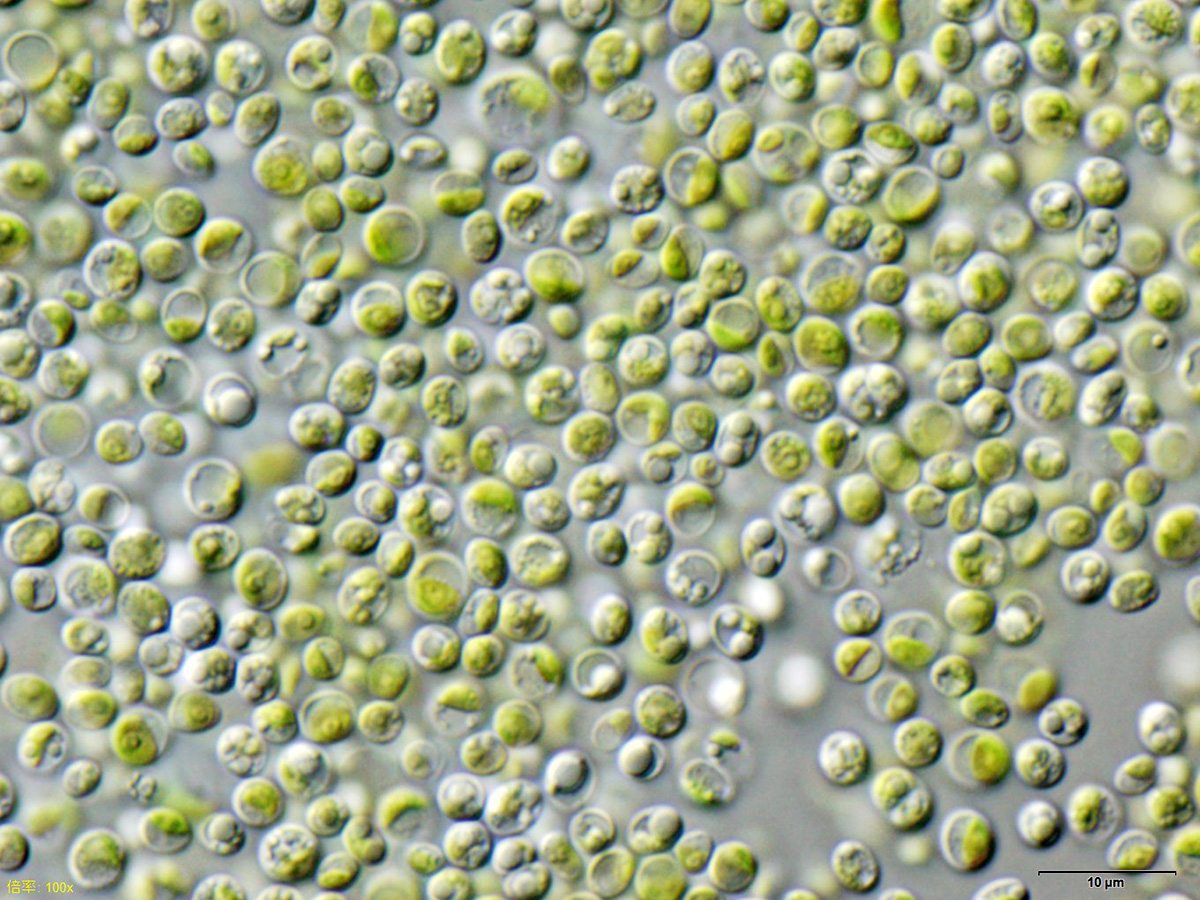 | ◉ Macrocystis pyrifera — largest algae: 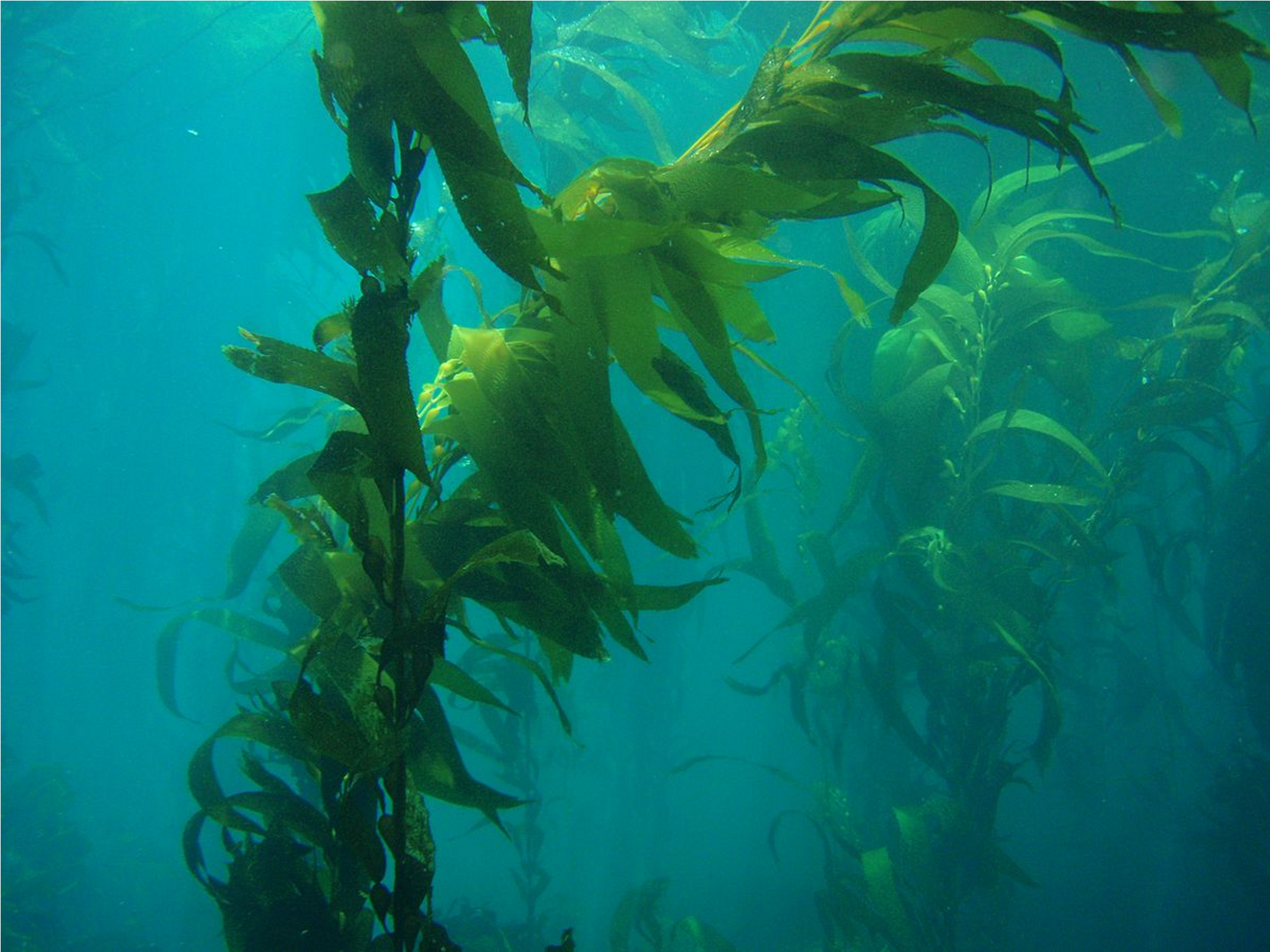 |
▢ Other Substrata:
❖ Endophytic Algae:
◉ Definition: Algae living inside plants
◉ Examples:
◈ Anabaena:
- •Leaf of Azolla
- •Smallest pteridophyte
- •Leaf used as biofertilizer
- •Coralloid root of Cycas
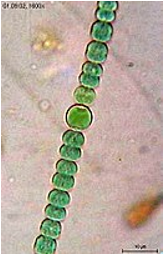
● Azolla:
◈ Nostoc:
- •Mycorrhizal root of Pinus
- •Symbiotic association with Anthoceros
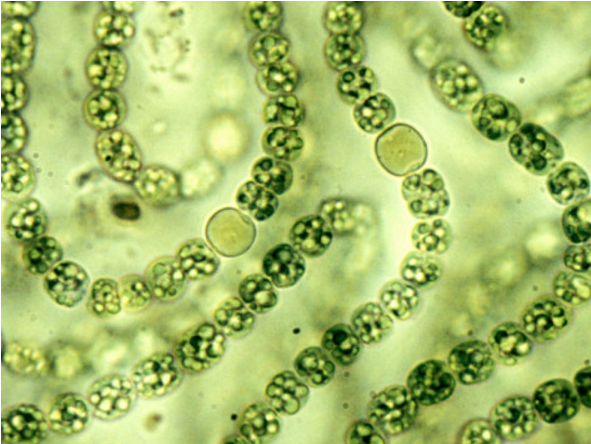
❖ Endozoic Algae:
◉ Definition: Algae living inside animals
◉ Examples: Zoochlorella and Zooxanthella in gastrodermis of Hydra
❖ Cryophytic Algae:
◉ Definition: Algae occurring in snow
◉ Example:
◈ Chlamydomonas nivalis: Causes red snow
◈ Cause of Red Colour: Hypnospores containing haematochrome pigment
Colour Phenomena
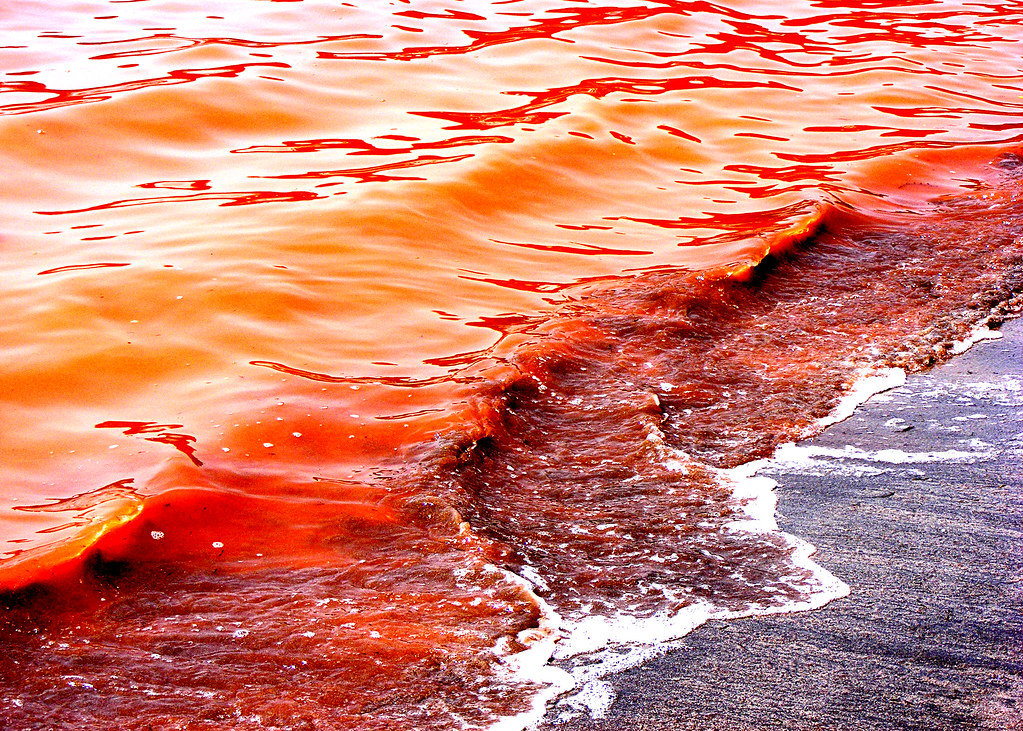
❖ Red Sea: Due to blue-green alga Trichodesmium erythraeum
❖ Red Tide: Due to dinoflagellates
📚
REPRODUCTION
▢ Vegetative Reproduction:
❖ Methods:
- •Fragmentation
- •Hormogonium formation in blue-green algae
- •Cell division in unicellular algae
❖ Hormogonium Formation:
◉ Fragmentation Site: Necrotic cell or heterocyst may break the trichome
◉ Hormogonium: Multicellular fragment of a trichome
▢ Asexual Reproduction:
❖ Mechanism: Formation of asexual spores called mitospores
Table 1: Types of Asexual Spores
Feature | Zoospore | Aplanospore | Hypnospore | Akinete |
|---|---|---|---|---|
Motility | Motile; flagella present | Non-motile | Non-motile | Non-motile |
Wall/Covering | Absent | Thin | Thick | Very thick |
Condition | Favourable | Favourable | Unfavourable | Highly unfavourable |
Special Role | — | — | — | Perennation |
Perennation = survival or conservation from one season to another.
▢ Sexual Reproduction:
❖ Isogamy:
◉ Meaning: Fusion of structurally similar gametes
◉ Example: Spirogyra
❖ Anisogamy: Fusion of dissimilar gametes
❖ Oogamy: Fusion of differentiated male and female gametes produced in reproductive cells
Evolutionary Trend
❖ Isogamy: Most primitive; very low genetic variation
❖ Oogamy: Most advanced; high genetic variation
📚
CLASSIFICATION
▢ Basis:
- •Types of pigments
- •Nature of reserve food material
▢ System: Fritsch divided algae into 11 groups.
Table 1: Major Algal Groups Described
Feature | Cyanophyceae / Myxophyceae / Blue-green algae / Cyanobacteria | Chlorophyceae / Green algae | Phaeophyceae / Brown algae | Rhodophyceae / Red algae |
|---|---|---|---|---|
Pigments |
|
|
|
|
Reserve Food Material | Cyanophycean starch | Starch | Laminarin / Mannitol | Floridean starch |
Examples |
|
|
|
|
Special points |
|
▢ Important Examples and Products:
❖ Cyanophyceae: 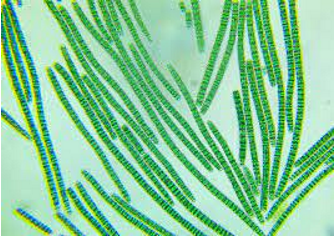
◉ Anabaena:
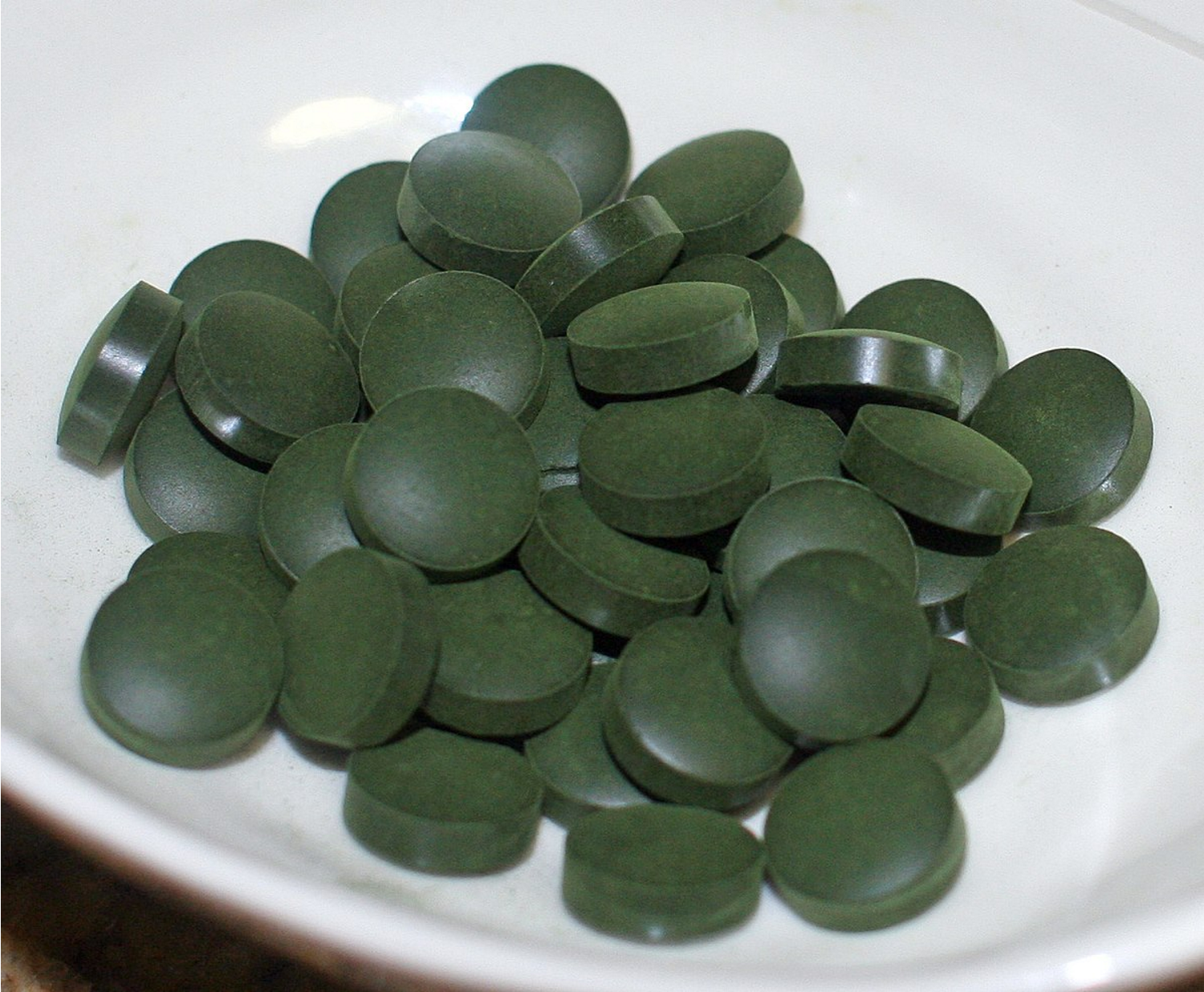
◉ Spirulina: Most proteinaceous algae
◉ Trichodesmium erythraeum: Causes red colour of the Red Sea
❖ Chlorophyceae:
◉ Chlorella:
- •Second most proteinaceous algae
- •Space algae
- •Source of antibiotic chlorellin
◉ Acetabularia:
- •Largest plant cell
- •Largest unicellular algae
- •Sea umbrella
◉ Parasitic Algae:
◈ Cephaleuros virescens: Leaf of tea plant → red rust of tea
◈ Cephaleuros arabica: Leaf of coffee plant → red rust of coffee
❖ Phaeophyceae:
- •Seaweeds
- •Sea kelps
- •Source of iodine
- •Source of algin
❖ Rhodophyceae:
◉ Batrachospermum: Red alga appearing blue; not marine
◉ Carrageenin: Extracted from red algae
◉ Agar-Agar:
◈ Sources:
- •Gelidium
- •Gracilaria
- •Gigartina
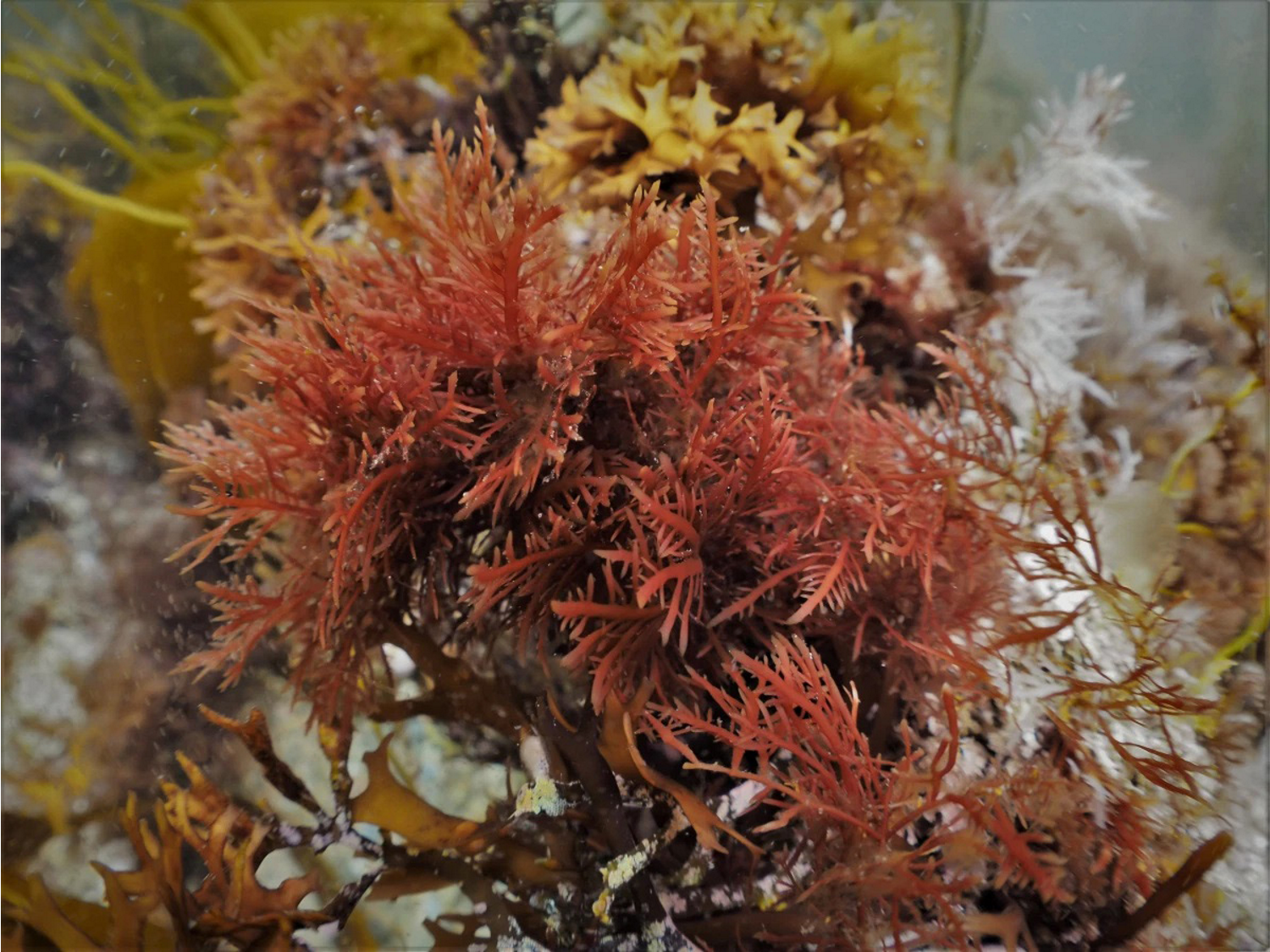
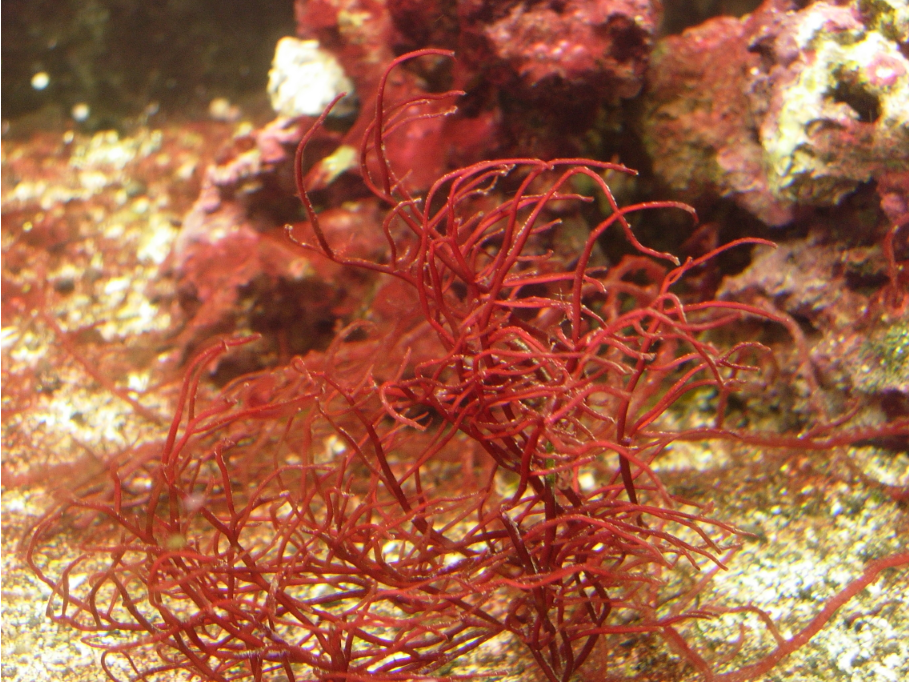
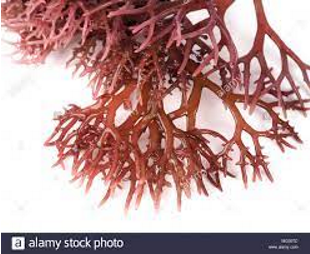
◈ Use: Base of culture media
📚
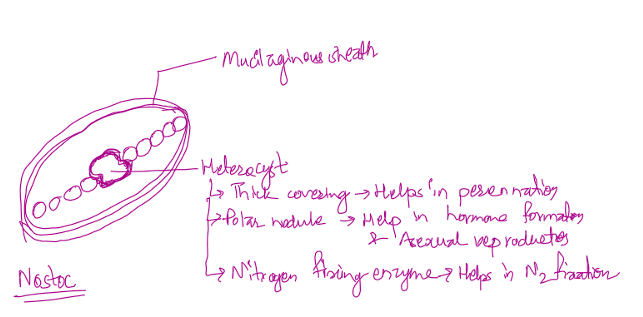
NOSTOC
▢ Taxonomic Position:
❖ Class: Cyanophyceae
❖ Order: Nostocales
▢ Habitat:
❖ General: Usually aquatic; some species terrestrial
❖ Terrestrial or Symbiotic Sites:
- •Rice fields
- •Coralloid root of Cycas
- •Leaf of Azolla
▢ Plant Body:
❖ Nature: Filamentous and colonial
❖ Colony Shape: Rounded or oval
❖ Formation: Aggregation of filaments
▢ Heterocyst:
Table 1: Heterocyst Features and Functions
Feature | Significance |
|---|---|
Larger size | Differentiation from vegetative cells |
Thick covering | Perennation |
Polar nodules | Hormogonium formation and asexual reproduction |
Nitrogen-fixing enzyme | Nitrogen fixation |
▢ Cell Structure: 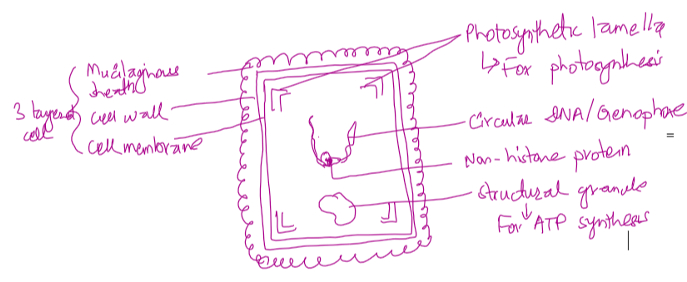
❖ Type: Prokaryotic
❖ Centroplasm: Contains circular DNA or genophore associated with non-histone protein
❖ Photosynthesis: Occurs on photosynthetic lamellae
❖ ATP Synthesis: Occurs at structural granules
▢ Reproduction: 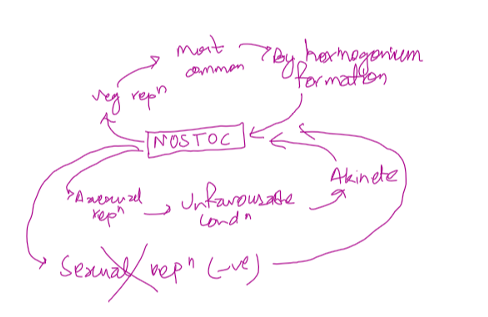
❖ Vegetative:
- •Most common method
- •Occurs in favourable conditions
- •By hormogonium formation
❖ Asexual:
- •Occurs in unfavourable conditions
- •By akinete formation
- •Thick-walled heterocyst may participate and assist in perennation
❖ Sexual: Absent
📚
CHLAMYDOMONAS
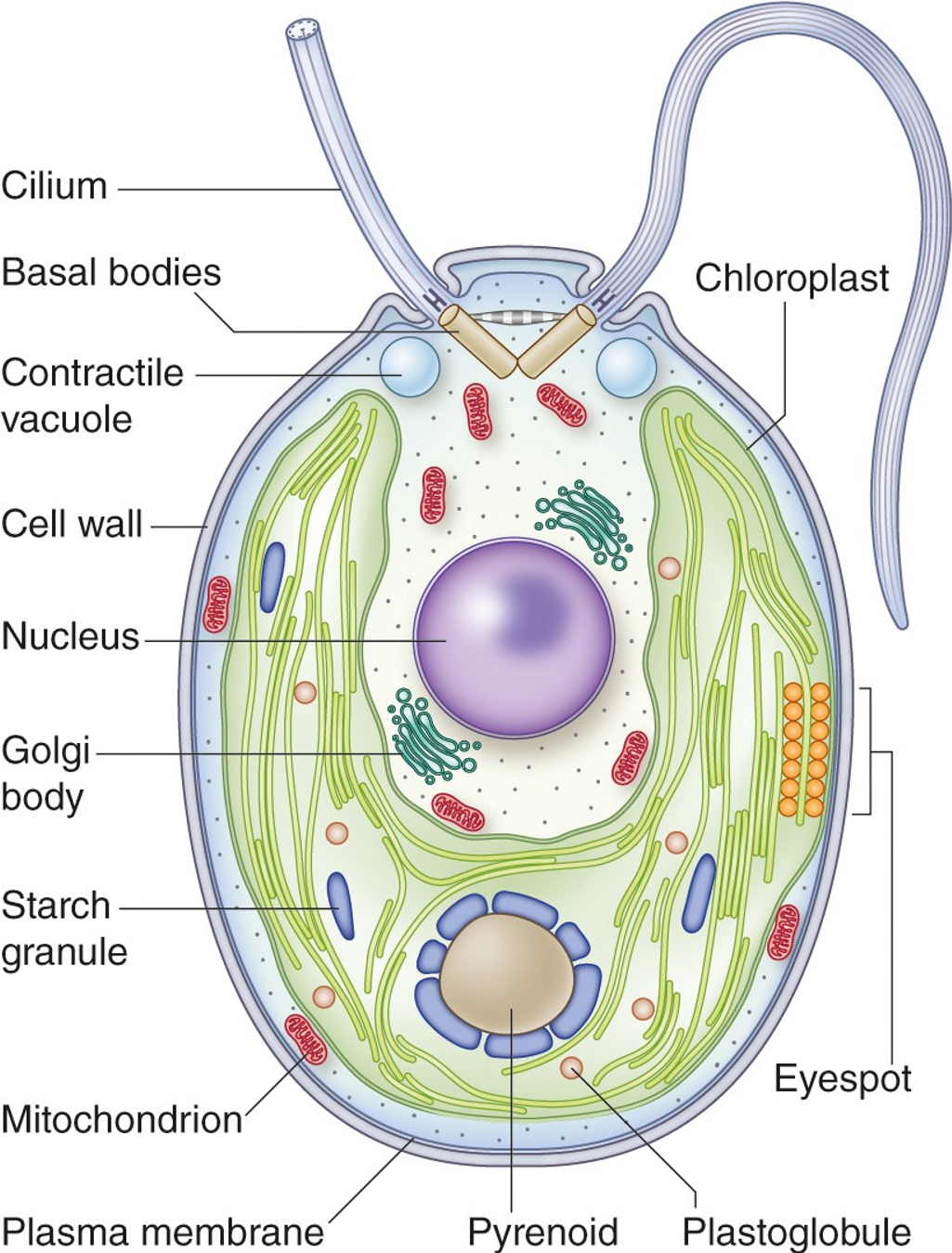
▢ General Characters:
❖ Organization:
- •Unicellular
- •Motile
- •Biflagellate
❖ Flagella: Arise from blepharoplasts or basal granules
❖ Nutrition: Autotrophic
▢ Cell Structure:
❖ Chloroplast: Single, large, cup-shaped chloroplast
❖ Pyrenoid:
◉ Structure: Protein body surrounded by starch plates or starch grains
◉ Function: Centre of starch formation
❖ Stigma or Eyespot:
◉ Position: Anterior end
◉ Colour: Orange or reddish
◉ Pigment: Carotenoids
◉ Function: Photoreception and direction of movement
▢ Asexual Reproduction:
- •Zoospores — biflagellate
- •Aplanospores
- •Hypnospores
- •Palmella stage
- •Akinetes
▢ Sexual Reproduction:
❖ Range: Isogamy → anisogamy → oogamy within the same genus
❖ Relative Sexuality:
◉ Definition: Production of two types of gametes by a unicellular organism
◉ Discovered by: Hertman
▢ Life Cycle: 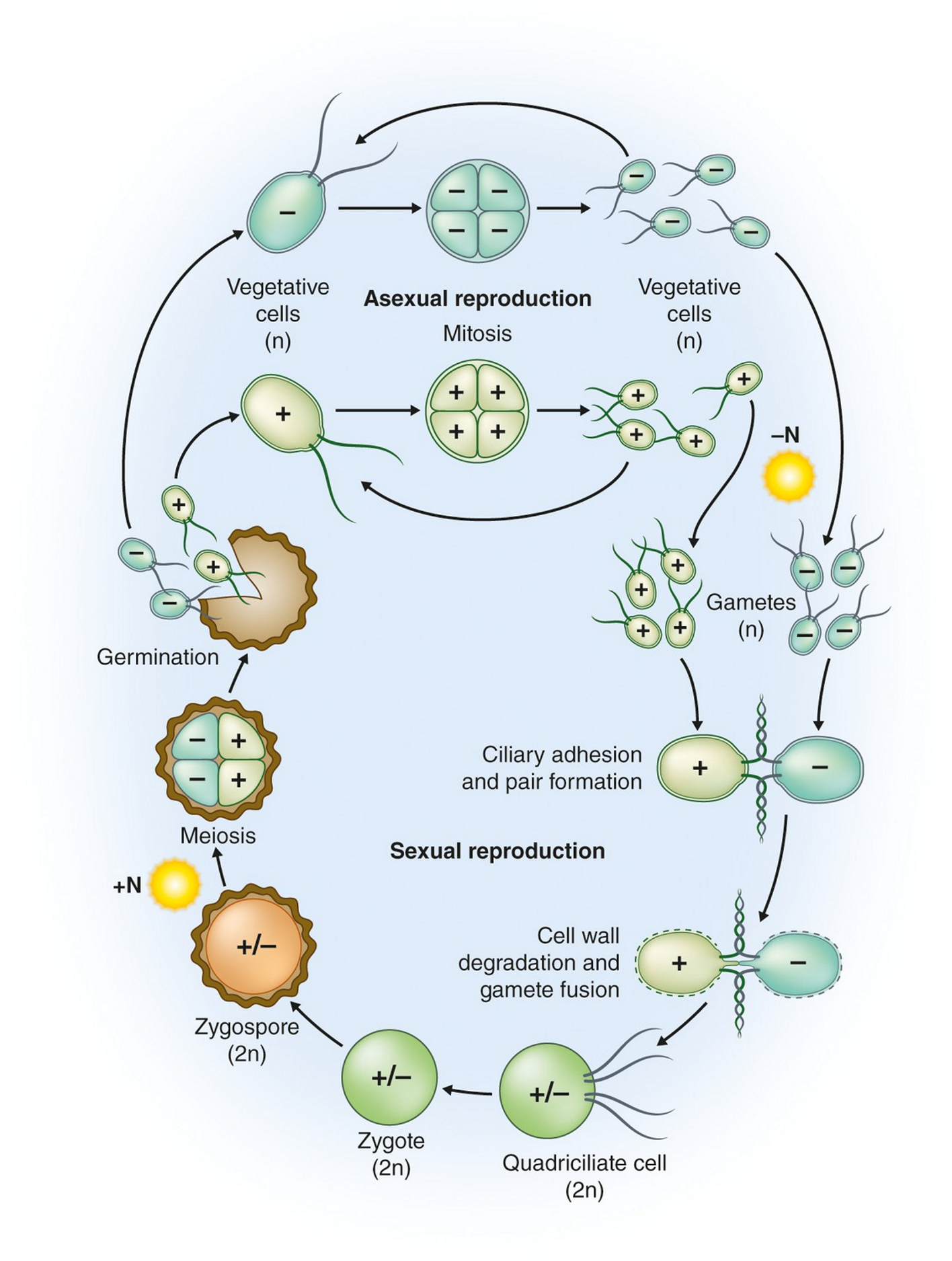
❖ Type: Haplontic
❖ Zygospore Formation: Resting zygote develops a thick covering and becomes a zygospore
❖ Germination:
- Meiosis occurs in the zygospore
- Four haploid spores are formed
- Each spore develops into a new thallus
📚
VOLVOX
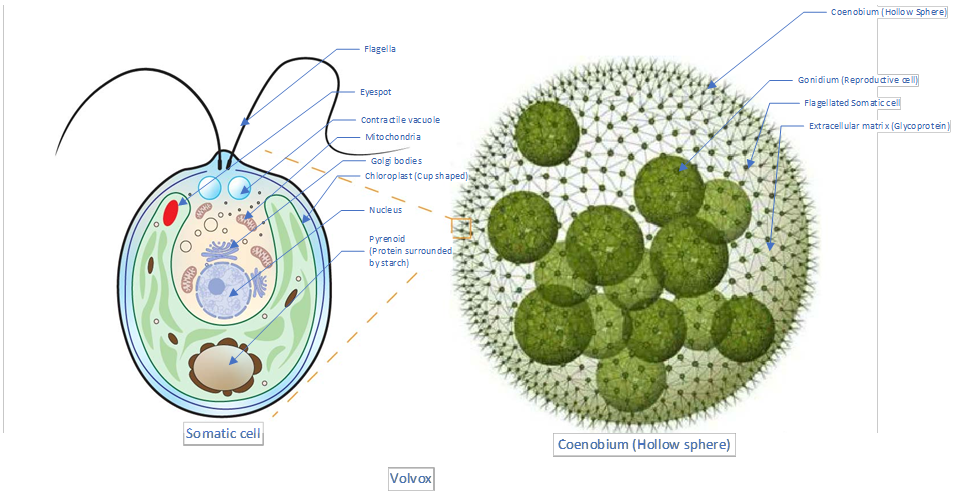
▢ Colony:
❖ Appearance: Ball-like colony, approximately 0.5 mm in diameter
❖ Coenobium: Hollow spherical plant body with thousands of cells arranged at the periphery
❖ Cell Types:
- •Germ cells
- •Flagellated somatic cells
❖ Extracellular Matrix: Glycoprotein
❖ Cell Connection: Adjacent cells connected by cytoplasmic strands formed during cell division
▢ Cell Structure:
❖ Shape: Spherical
❖ Chloroplast: Cup-shaped with pyrenoids
❖ Other Components:
- •Nucleus
- •Vacuoles
- •Eyespot
❖ Flagella: Two equal-sized anterior flagella
❖ Movement: Coordinated flagellar movement propels the colony
❖ Metabolic Independence: Each cell independently performs respiration, photosynthesis and excretion
▢ Eyespot and Polarity:
❖ Polarity: Anterior cells possess larger eyespots than posterior cells
❖ Function: Light reception and phototaxis
▢ Ecological Importance:
- •Contributes significantly to oxygen production
- •Serves as food for many aquatic organisms
▢ Harmful Algal Bloom:
❖ Species: Volvox aureus
❖ Condition: Rapid multiplication may produce harmful algal bloom
❖ Favouring Factors:
- •Warm water
- •High nitrogen content
▢ Life Cycle:
❖ Type: Haplontic
❖ Dominant Stage:
❖ Sporophytic Stage:
❖ Cell Differentiation: Reproductive cells and somatic cells
❖ Environmental Pattern:
◉ Favourable Conditions: Asexual reproduction
◉ Unfavourable Conditions: Sexual reproduction
▢ Asexual Reproduction:
❖ Reproductive Cell: Gonidium
❖ Process:
- Gonidium undergoes multiple divisions
- Daughter colony of approximately 3200 cells is formed
- Daughter colony matures
- Mature daughter colony is released from the parent
▢ Sexual Reproduction:
❖ Type: Oogamous
❖ Sexual Condition: Coenobium may be monoecious or dioecious
❖ Male Reproductive Structure:
◉ Antheridium: Produces spermatozoa in a bunch
◉ Spermatozoa:
- •Spindle-shaped
- •Pair of apical cilia or flagella
- •Released singly or in groups
❖ Female Reproductive Structure:
◉ Oogonium: Produces one ovum
◉ Ovum:
- •Large
- •Non-motile
- •Green due to chloroplast
- •Contains pyrenoids
- •Contains stored food
❖ Fertilization:
- Antherozoids move chemotactically towards the oogonium
- Proteolytic enzymes break the oogonial wall
- Many sperms may enter, but only one fertilizes the egg
- Fusion forms a diploid zygote
❖ Zygote and Germination:
- Zygote forms a cyst
- Accumulation of haematochrome makes it red
- Zygote detaches after disintegration of the parent
- Zygote remains dormant for a long period
- Meiosis produces four haploid cells
- Repeated mitotic divisions form a new colony
📚
SPIROGYRA
▢ Habitat: Stagnant freshwater
▢ Common Names:
- •Pond scum
- •Pond silk
- •Water silk
- •Hair of princess
▢ Plant Body: 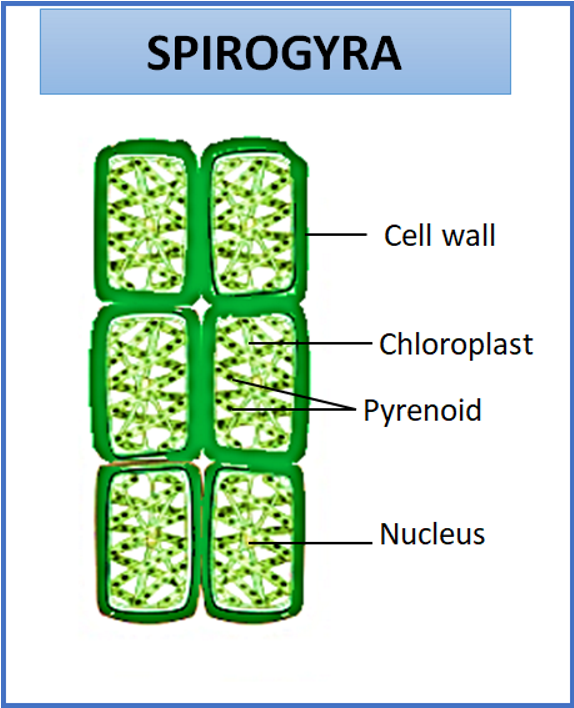
❖ Nature: Unbranched filament composed of cylindrical cells
❖ Slipperiness: Due to pectinous outer wall layer
❖ Chloroplast: 1–16 ribbon-shaped chloroplasts spirally coiled
❖ Pyrenoids: Numerous protein bodies surrounded by starch
▢ Reproduction: 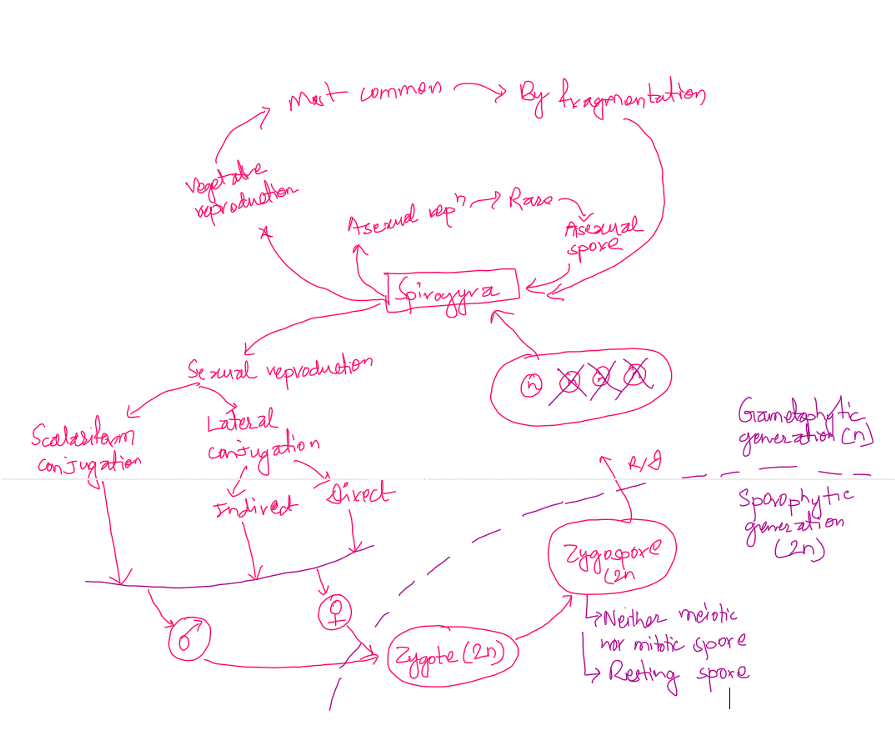
Fig.Life cycle of Spirogyra
❖ Most Common Method: Fragmentation
❖ Vegetative Reproduction:
- •Occurs in favourable conditions
- •By fragmentation
- •Most common mode
❖ Asexual Reproduction:
- •Occurs in unfavourable conditions
- •Rare
- •By akinete or hypnospore formation
- •Zoospores absent
❖ Sexual Reproduction:
◉ Time: At the end of favourable conditions
◉ Type: Isogamy
◉ Scalariform Conjugation: 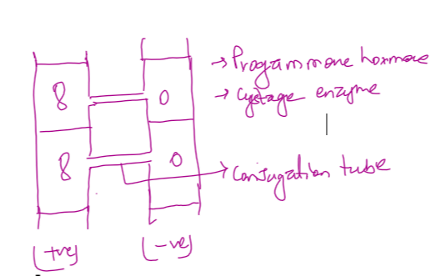
◈ Occurrence: Usually in heterothallic species
◈ Process:
- Positive and negative filaments come together under the influence of progammone hormone
- Conjugation tubes form with the help of cytase enzyme
- A ladder-like appearance develops
- Male gamete from the positive filament passes through the conjugation tube
- Fertilization occurs in the negative filament
◉ Lateral Indirect Conjugation:
◈ Occurrence: Homothallic species
◈ Process: A lateral tube forms between active and passive cells; male gamete passes into the passive cell
◈ Gamete Movement: Gametes are non-motile and move by activity of the contractile vacuole
◉ Lateral Direct Conjugation:
◈ Occurrence: Homothallic species
◈ Process: Membrane between active and passive cells dissolves; male gamete directly enters and fertilizes the passive cell
▢ Zygospore and Germination:
- Under unfavourable conditions, the zygote develops a thick covering and becomes a zygospore
- Meiosis occurs during germination
- Four haploid spores are produced
- Three spores degenerate
- One spore develops into a new Spirogyra filament
Nature of Sexual Reproduction
❖ Morphologically: Isogamous
❖ Physiologically: Anisogamous
📚
ULOTHRIX
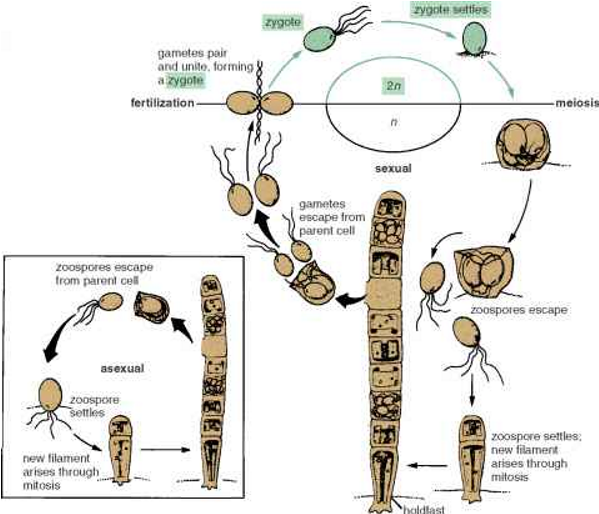
▢ Plant Body:
❖ Nature: Unbranched filament
❖ Attachment: Attached to substratum by a holdfast
❖ Holdfast: Hyaline or colourless because chlorophyll is absent
▢ Cell Wall:
❖ Inner Layer: Cellulose
❖ Outer Layer: Protopectin; insoluble in water
❖ Texture: Filament is wet or slippery due to protopectin
▢ Cell Structure:
❖ Chloroplast: Single girdle-shaped chloroplast
❖ Pyrenoids: One or more
▢ Asexual Reproduction:
❖ Condition: Favourable
❖ Zoospores:
- •Usually quadriflagellate
- •May be microzoospores or macrozoospores
- •Sometimes biflagellate microzoospores are produced
- •All cells except the holdfast can produce zoospores
❖ Other Spores and Stages:
- •Aplanospores — thin-walled
- •Hypnospores — thick-walled
- •Akinetes
- •Palmella stage
▢ Sexual Reproduction:
❖ Type: Isogamous
❖ Thallism: Heterothallic
❖ Fertilization: External; occurs on the water surface
❖ Gametes: Motile and biflagellate
❖ Process:
- Positive and negative gametes fuse
- A quadriflagellate zygote is formed
- Zygote sinks to the bottom
- Flagella are lost
- A thick-walled zygospore is formed
- After a resting period, meiosis occurs
- Haploid meiospores are produced
- Under favourable conditions, each spore germinates into one new filament
▢ Life Cycle: Haplontic
Q1.
Spiral shaped chloroplast is found in: [MOE - 2008]
📅MOE - 2008
Q2.
Spirogyra belongs to order: [MOE-2063 Falgun]
📅MOE-2063 Falgun
Q3.
Water bloom is caused by: [MOE-2060]
📅MOE-2060
Q4.
Brown algae is found in: [MOE - 2003]
📅MOE - 2003
Q5.
Reticulate type chloroplast is present in [MOE-2003 ]
📅MOE-2003
Q6.
Nostoc belongs to: [MOE-2002, 2058)
📅MOE-2002, 2058)
Q7.
True nucleus is absent in: [MOE-2057]
📅MOE-2057
Q8.
Heterocyst are found in: [MOE-2056
📅MOE-2056
Q9.
Zygospore of Spirogyra is: [MOE-2055]
📅MOE-2055
Q10.
Nostoc reproduces by [MOE-2053
📅MOE-2053
Q11.
Zygospore is found in which of the following: [MOE-2060]
📅MOE-2060
Q12.
Which one is biofertilizers: [MOE - 2008)
📅MOE - 2008)
Q13.
Which of the following causes red rust of tea ? [IOM - 1997]
📅IOM - 1997
Q14.
Prokaryotic cell structure is found in: [IOM -1999
📅IOM -1999
Q15.
Nutritious culture medium is obtained from: [IOM -2006]
📅IOM -2006
Q16.
The parasitic algae is: [IOM 2002, 1999, 2010]
📅IOM 2002, 1999, 2010
Q17.
The gametes of Chlamydomonas are: [IOM-200)
📅IOM-200)
Q18.
Blue green algae is the name for: [IOM- 2060
📅IOM- 2060
Q19.
All algae contain: [IOM - 1997, 1996]
📅IOM - 1997, 1996
Q20.
During germination of zygospore in Spirogyra takes place: [IOM 199
📅IOM 199
Q21.
Pyrenoids are: [BPKIHS 2005 )
📅BPKIHS 2005 )
Q22.
The algae which helps in the fixation of nitrogen belongs to class. [BPKIHS 1997]
📅BPKIHS 1997
Q23.
Algae is characterized by:[BPKIHS 1994]
📅BPKIHS 1994
Q24.
Red colour of the red algae is due to the presence of [BPKIMS 1994)
📅BPKIMS 1994)
Q25.
Algae found in thermal springs belong to [IE-2002)
📅IE-2002)
Q26.
Although various types of gametes flow in water but particular gamete can fuse only with particular gamete. This is a kind of [IE - 2002]
📅IE - 2002
Q27.
Chlamydomonas is [IE - 2002]
📅IE - 2002
Q28.
Among the followings, the most complete cellular structure is found in: [IE - 2002]
📅IE - 2002
Q29.
Green alga belongs to [IE - 2005]
📅IE - 2005
Q30.
Organisms that fix nitrogen in aquatic habitat are [IE - 2009]
📅IE - 2009
Q31.
Cyanobacteria are: [IE - 2002]
📅IE - 2002
Q32.
Spores of true slime moulds are produced in structure is called: [IE - 2007]
📅IE - 2007
Q33.
Nostoc is found symbotic with [KUMET 2010]
📅KUMET 2010
Q34.
Nutritive substance required for tissue culture is obtained from [BPKIHS - 2016]
📅BPKIHS - 2016
Q35.
The parasitic green algae is: [BPKIHS - 2014]
📅BPKIHS - 2014
Q36.
Culture media is extracted from [BPKIHS - 2014]
📅BPKIHS - 2014
Q37.
Haplontic life cycle is present in [BPKIHS - 2012]
📅BPKIHS - 2012
Q38.
Which of the following alga has heterotrichous habitat? [BPKIHS - 2011)
📅BPKIHS - 2011)
Q39.
Agar agar and carageenin are obtained from [IOM-2014]
📅IOM-2014
Q40.
Sexual reproduction in Spirogyra is [MOE 2014]
📅MOE 2014
Q41.
Chemical constituent of pyrenoid that stores starch is [MOE 2014)
📅MOE 2014)
Q42.
Sexual reproduction in Spirogyra is [MOE 2013]
📅MOE 2013
Q43.
Motile reproductive bodies are absent in [MOE 2012]
📅MOE 2012
Q44.
How many species have been recorded on the earth? [MOE 2012]
📅MOE 2012
Q45.
Sexual reproduction by conjugation is found in algae [MOE 2068)
📅MOE 2068)
Q46.
Carl Linneaus is credited for introducing [MOE 2068]
📅MOE 2068
Q47.
Nitrogen fixation is done by [MOE 2068]
📅MOE 2068
Q48.
All living organisms of the earth belong to [MOE 2010]
📅MOE 2010