📚
INTRODUCTION
▢ Study: Study of lichens = Lichenology
▢ Definition: Lichens are symbiotic associations between an algal partner and a fungal partner.
▢ Nature:
- •Composite or dual organisms
- •Possess a distinct structure different from either partner
- •Show very slow growth
- •Plant body represented by an irregularly shaped and variously coloured thallus
▢ Partners:
❖ Algal Partner:
◉ Name: Phycobiont
◉ Groups:
- •Green algae
- •Blue-green algae or cyanobacteria
◉ Function: Photosynthesis and food production
❖ Fungal Partner:
◉ Name: Mycobiont
◉ Groups:
- •Ascomycetes
- •Basidiomycetes
◉ Functions:
- •Absorption of water and minerals
- •Protection
- •Attachment
- •Reproduction
▢ Nature of Association:
❖ Helotism:
◉ Definition: Association in which the fungus acts as the master and the alga as the slave
◉ Fungal Role:
- •Absorption
- •Protection
- •Reproduction
◉ Algal Role: Photosynthesis
❖ Alternative Description: Fungus parasitizing an alga
📚
AIR POLLUTION SENSITIVITY
▢ Sulphur Dioxide:
❖ Effect:
❖ Mechanism:
- A toxic substance called phycophytin is formed
- The lichen dies
▢ Distribution: Lichens generally do not grow near large cities, industrial areas or places with heavy smoke and air pollution.
▢ Indicator Role: Useful biological indicators of air pollution
▢ Radioactivity: Lichens are efficient absorbers and accumulators of radioactive substances
📚
CLASSIFICATION
▢ Based on Habitat:
Table 1: Habitat-Based Classification
Type | Habitat |
|---|---|
Saxicolous | Grow on rocks or stones |
Terricolous | Grow on soil |
Corticolous | Grow on the bark of trees |
Lignicolous | Grow on wood |
▢ Based on Fungal Partner:
❖ Ascolichens:
◉ Fungal Partner: Ascomycetes
◉ Occurrence: Majority of lichens
◉ Algal Partner: Usually green algae; rarely blue-green algae
◉ Types:
◈ Gymnocarpae:
■ Fruiting Body: Apothecium
■ Shape: Cup-shaped
◈ Pyrenocarpae:
■ Fruiting Body: Perithecium
■ Shape: Flask-shaped
❖ Basidiolichens:
◉ Fungal Partner: Basidiomycetes
◉ Algal Partner: Usually blue-green algae
❖ Partner Distribution:
Table 1: Algal Partners in Lichens
Algal Group | Approximate Frequency |
|---|---|
Green algae or Chlorophyceae | Approximately 80% |
Blue-green algae or Cyanophyceae | Approximately 20% |
Most lichens are associations between green algae and Ascomycetes.
◉ Important Green Algal Partners:
- •Trebouxia
- •Cladophora
- •Pleurococcus
◉ Important Blue-Green Algal Partners:
- •Anabaena
- •Nostoc
- •Scytonema
▢ Based on Thallus Structure and Attachment:
Table 1: Thallus-Based Classification
Type | Characteristics | Examples |
|---|---|---|
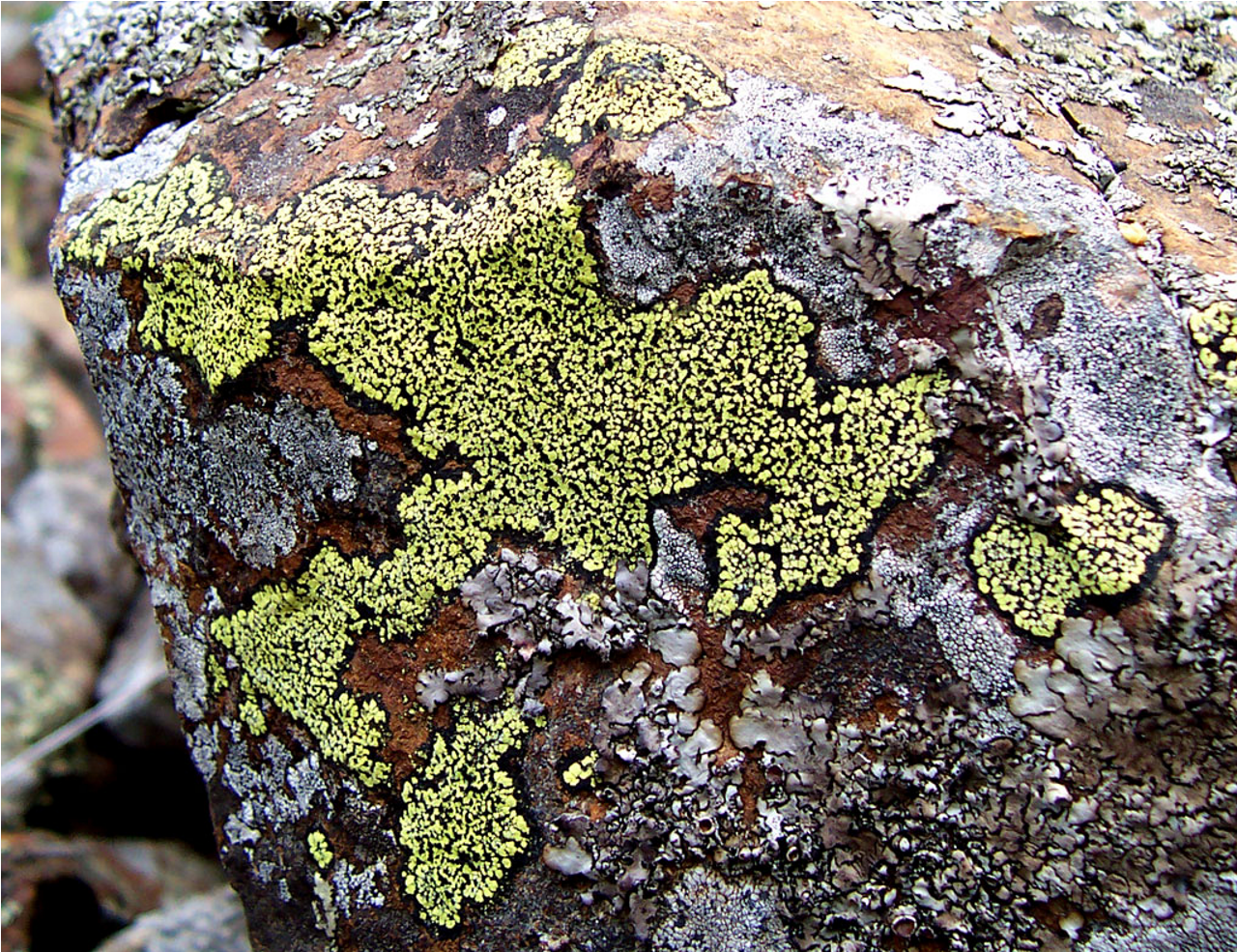
Crustose | ◉ Features:
|
    |
Foliose | ◉ Features:
|
|
Fruticose | ◉ Features:
|
|
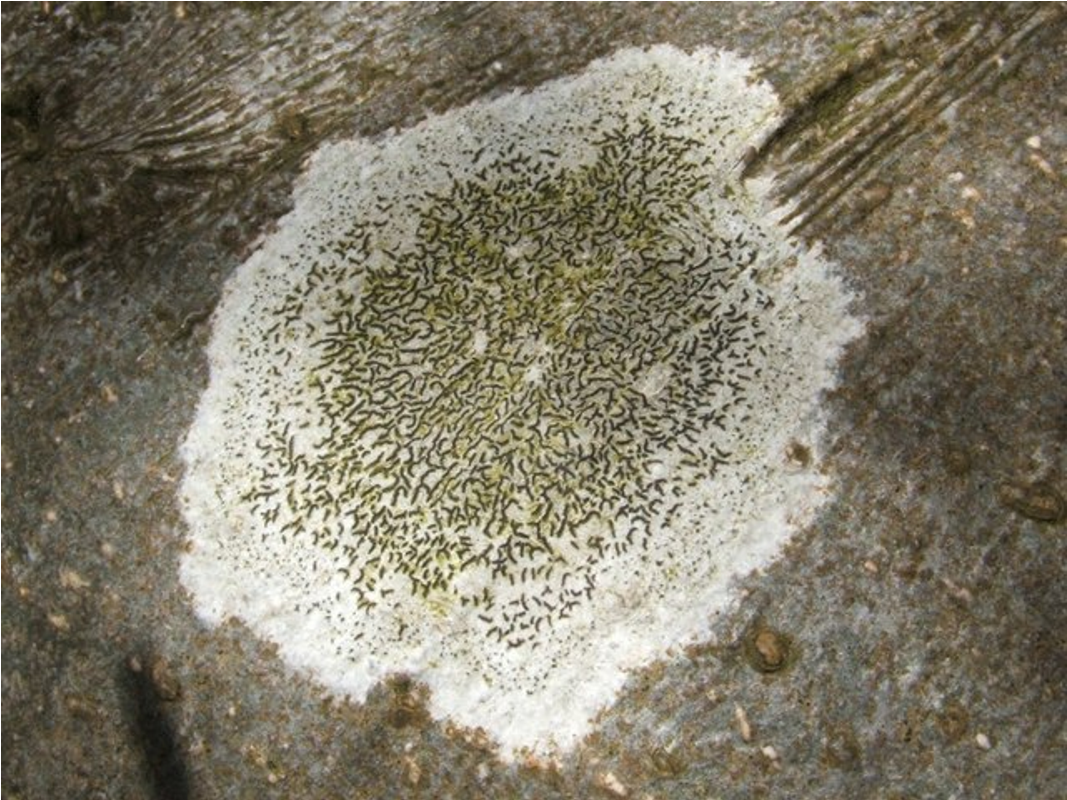
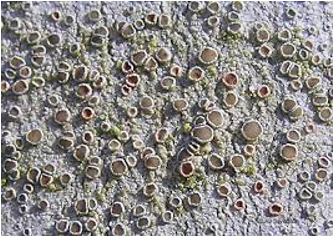
❖ Crustose Lichens:
◉ Examples:
◈ Graphis: Crustose lichen
◈ Lecanora: Crustose lichen
◈ Dermatocarpon: Crustose lichen
◈ Rhizocarpon: Crustose lichen
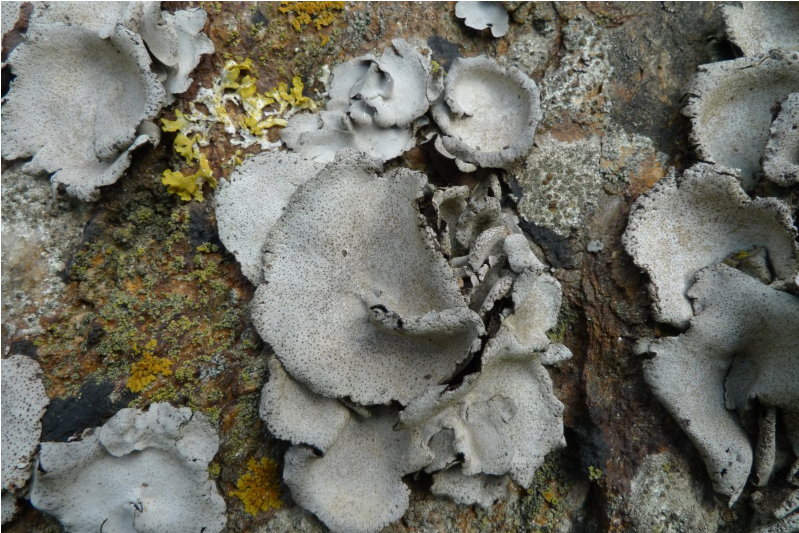
❖ Foliose Lichens:
◉ Parmelia: 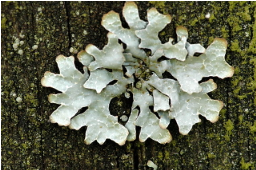
◈ Common Name: Rock flower
◈ Uses:
- •Used as curry powder
- •Traditionally used in the treatment of epilepsy
◉ Peltigera: 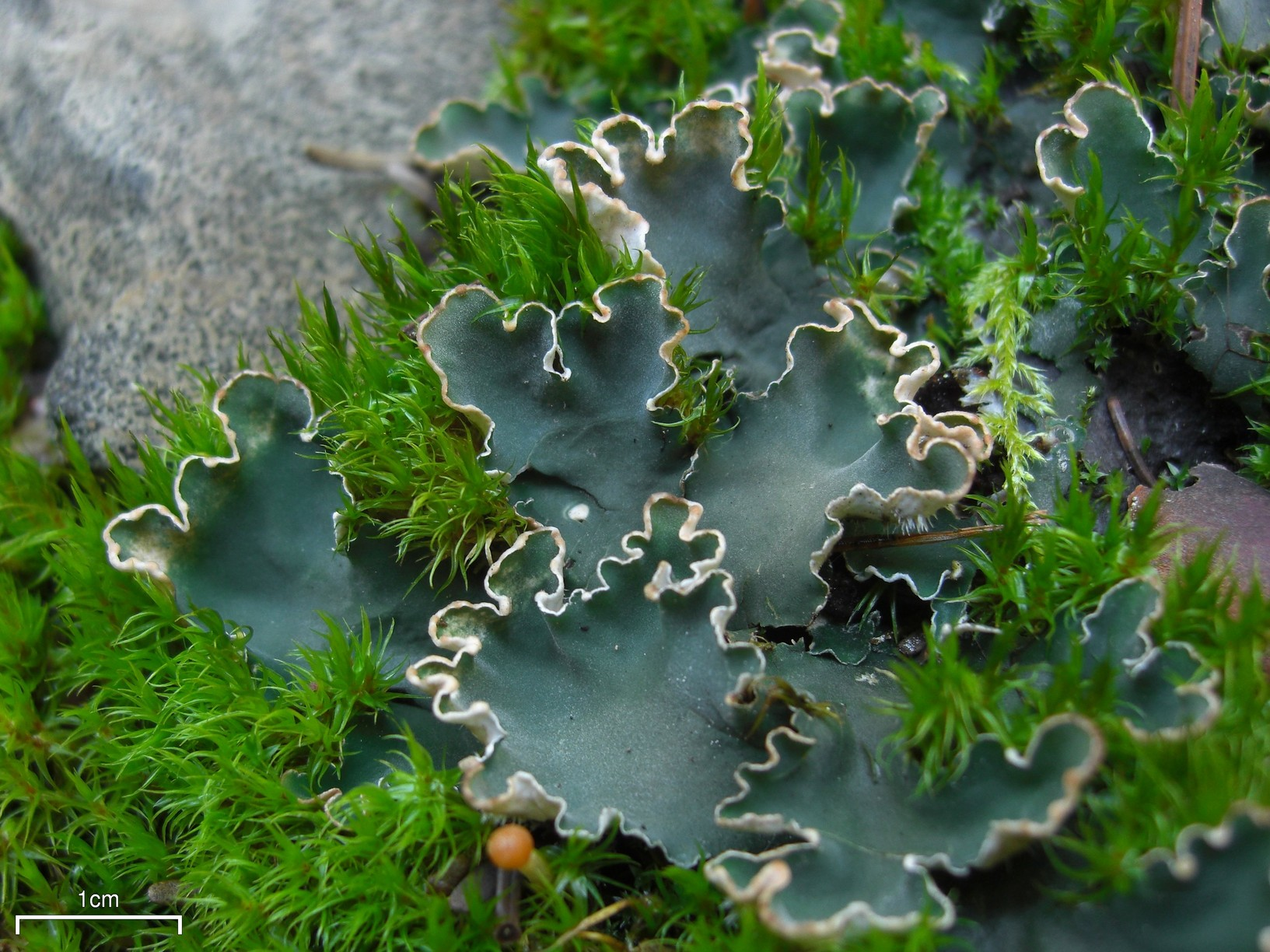
◈ Common Name: Dog lichen
◈ Use: Traditionally used as medicine for hydrophobia
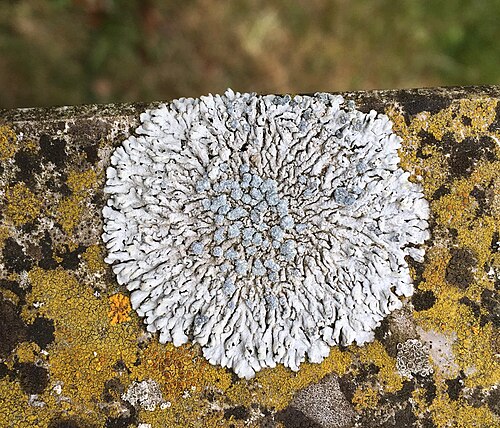
◉ Physcia:
- Foliose lichen
❖ Fruticose Lichens:
◉ Usnea: 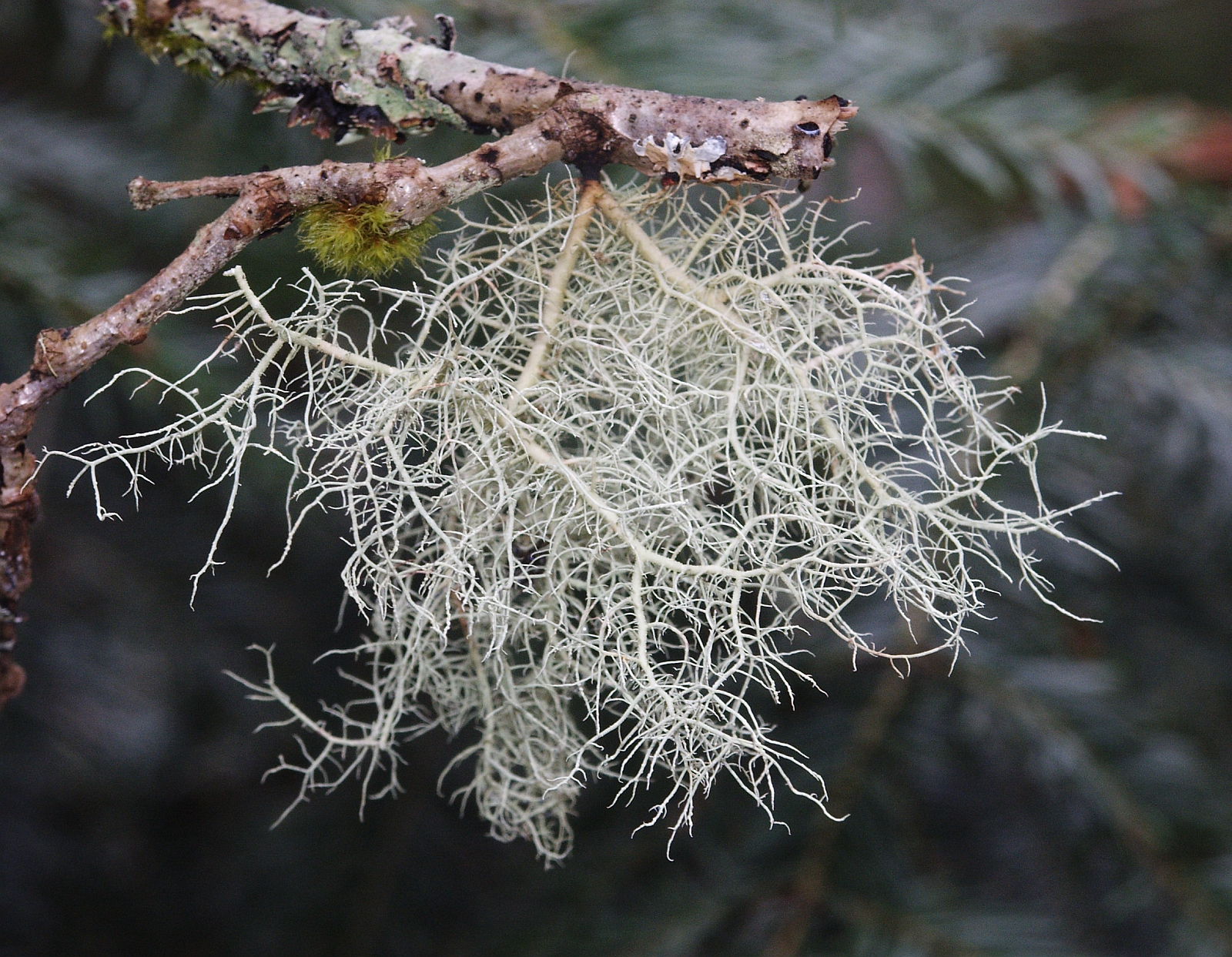
◈ Common Name: Old man's beard
◈ Importance:
- •Source of usnic acid
- •Usnic acid is a broad-spectrum antibiotic
- •Dry thalli may contribute to the spread of forest fire during hot seasons
◉ Cladonia: 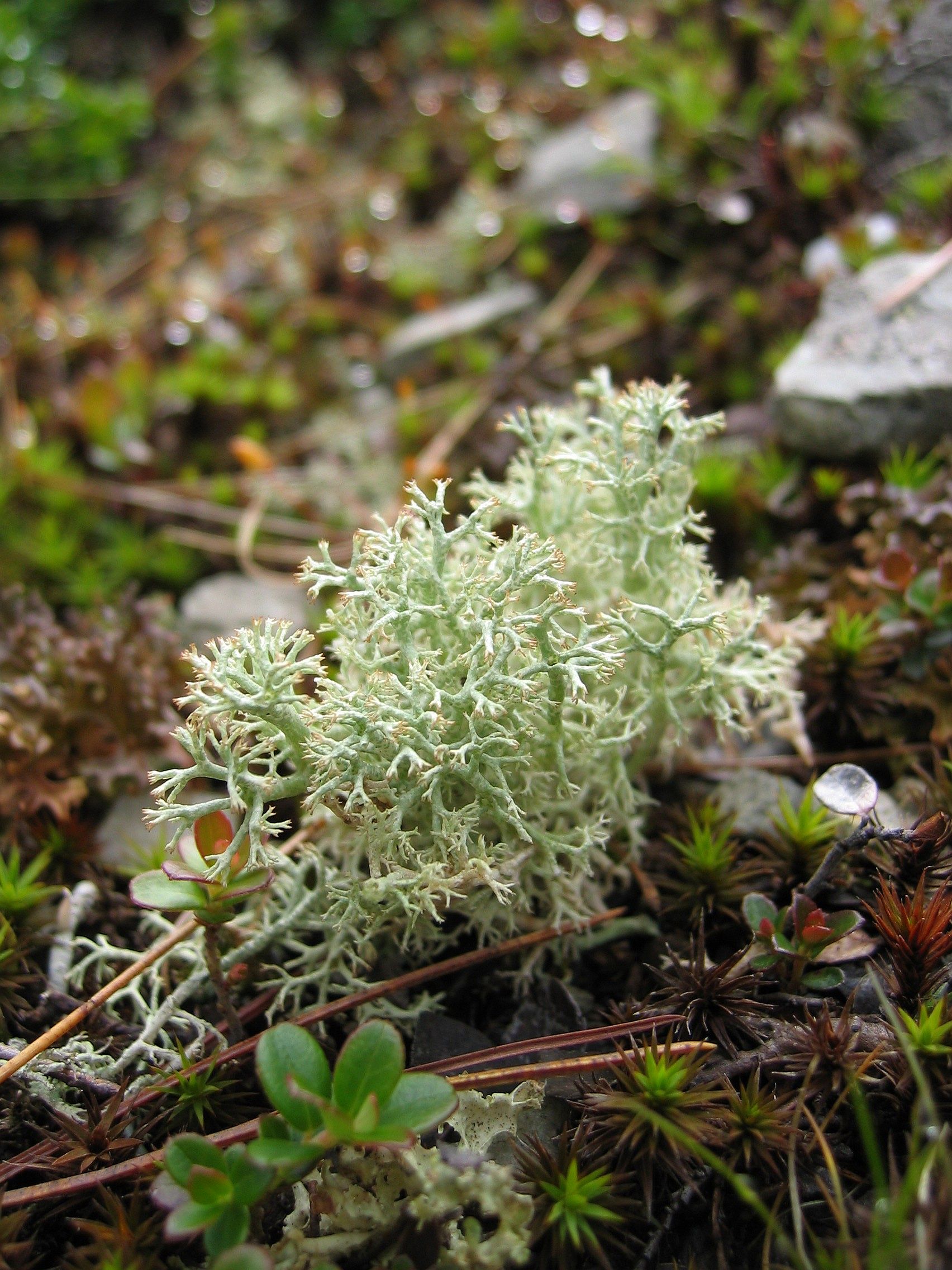
◈ Common Name: Reindeer moss
◈ Importance:
- •Serves as food for reindeer in Arctic regions
- •Traditionally used in the treatment of whooping cough
◉ Cetraria: 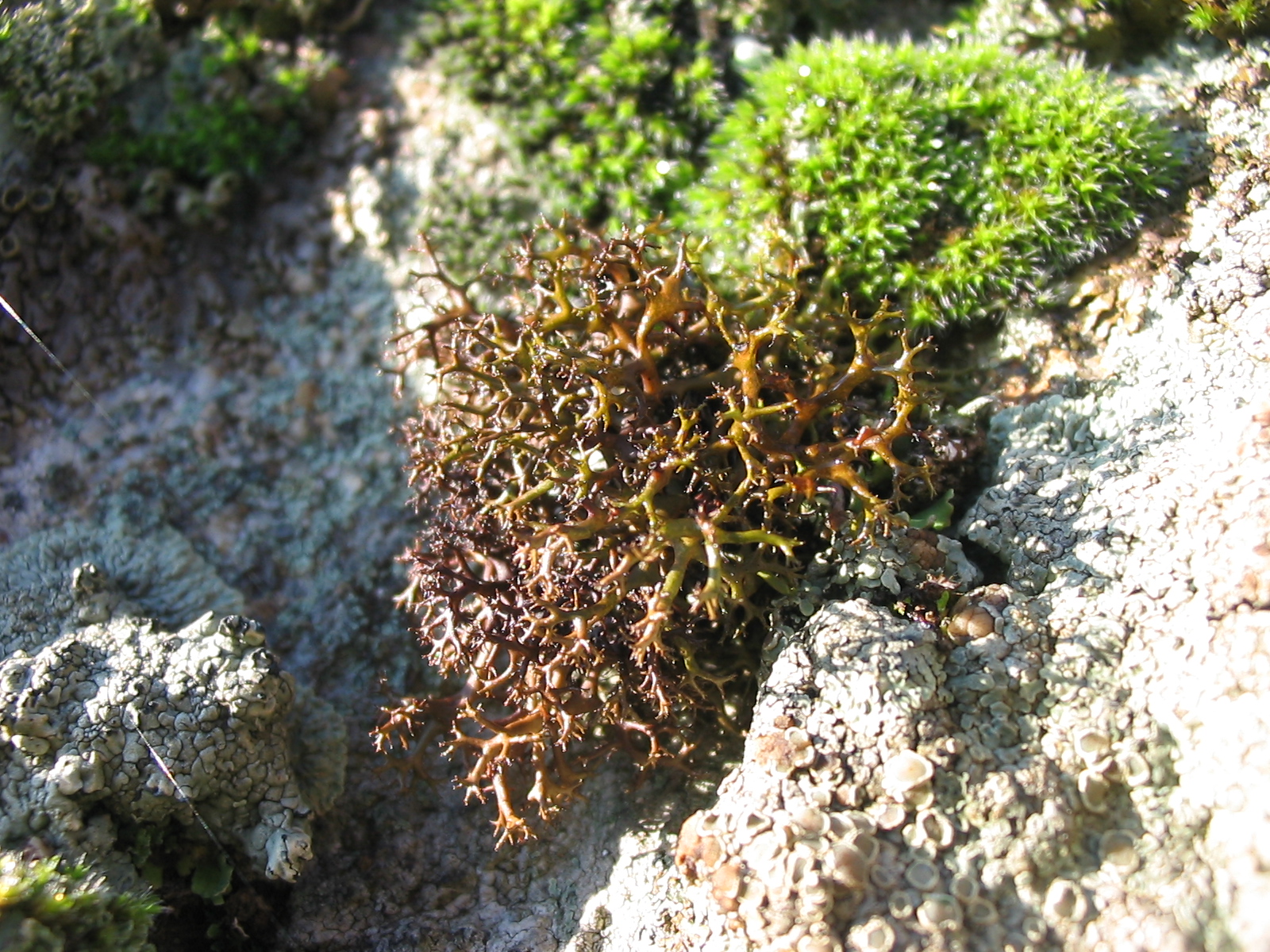
◈ Common Name: Iceland moss
◈ Importance:
- •Edible in Iceland
- •Traditionally used as medicine for diabetes
❖ Filamentous Lichen: Racodium
▢ Based on Algal Partner:
❖ Chlorophycophilous Lichens: Algal partner belongs to Chlorophyceae or green algae
❖ Cyanophycophilous Lichens: Algal partner belongs to Cyanophyceae or blue-green algae
▢ Based on Internal Anatomy:
Table 1: Anatomical Classification of Lichen Thallus
Type | Distribution of Partners | Occurrence | Examples |
|---|---|---|---|
Homoiomerous | Algal and fungal components are uniformly distributed throughout the thallus | Rare | Commonly represented by simple crustose forms |
Heteromerous | Thallus differentiated into distinct fungal and algal zones | Most lichens |
|
📚
THALLUS STRUCTURE
▢ General Organization: Lichen thallus is formed by closely associated algal cells and fungal hyphae.
▢ Typical Heteromerous Thallus:
❖ Upper Cortex: Compact fungal hyphae forming the upper protective layer
❖ Algal Zone: Layer containing algal cells surrounded by fungal hyphae
❖ Medulla: Loosely arranged fungal hyphae
❖ Lower Cortex: Compact fungal layer on the lower surface
❖ Rhizines: Root-like fungal structures attaching the thallus to the substratum
📚
SPECIAL STRUCTURES
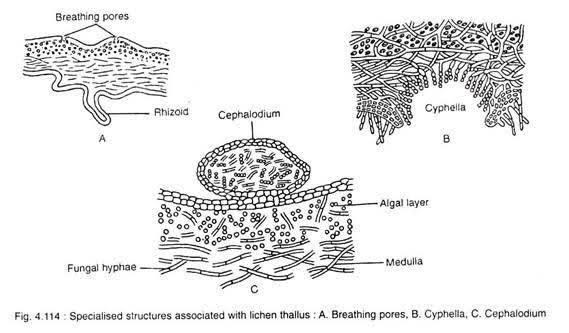
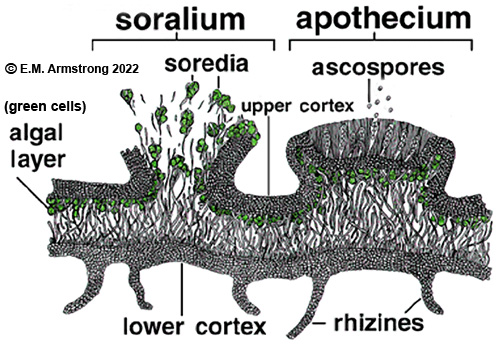

Table 1: Special Structures Associated with Lichen Thallus
Structure | Location or Nature | Function |
|---|---|---|
Breathing Pores | Loosely arranged areas in the upper cortex | Gaseous exchange |
Cyphellae | Loosely arranged areas or depressions in the lower cortex |
|
Cephalodia | Special swellings or outgrowths of the thallus | Retention of moisture |
Isidia | Corticated outgrowths of the lichen thallus |
|
Soralium | Localized powdery patch on the thallus | Produces soredia |
📚
REPRODUCTION
▢ Vegetative Reproduction:
❖ Fragmentation: Each detached fragment containing both partners may develop into a new thallus
❖ Isidia:
◉ Definition: Small outgrowths of the lichen thallus containing both algal and fungal components
◉ Process: After detachment, each isidium may form a new lichen thallus
◉ Functions:
- •Vegetative reproduction
- •Increase in photosynthetic surface area
❖ Soredia: 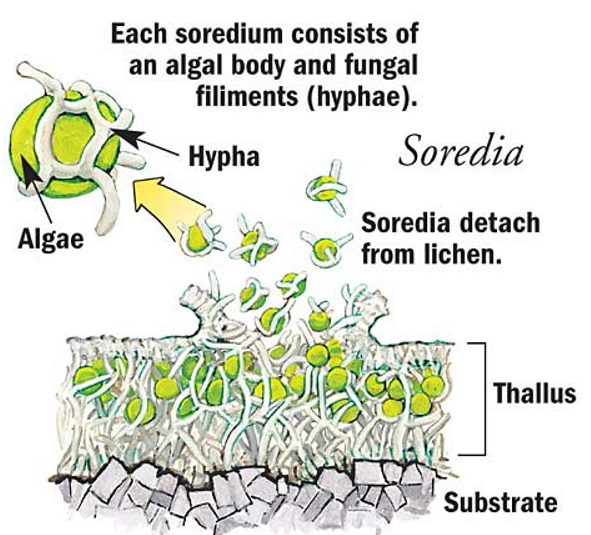
◉ Definition: Small granular propagules composed of one or more algal cells surrounded by fungal hyphae
◉ Site of Production: Produced in large numbers in a patch called a soralium
◉ Process:
- Soredia develop in the soralium
- They detach from the parent thallus
- They are dispersed
- Each soredium regenerates into a new lichen thallus
▢ Asexual Reproduction:
❖ Spores:
- •Pycnidiospores
- •Pycniospores
❖ Pycnidium: Flask-shaped structure in which pycniospores are produced
❖ Ostiole: Pore through which the pycnidium opens to the exterior
▢ Sexual Reproduction: 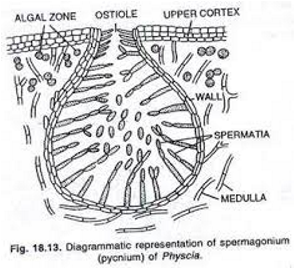
❖ Responsible Partner: Fungal partner only
❖ Role of Algal Partner: No direct role in sexual reproduction
❖ Male Reproductive Structure:
◉ Name: Spermatogonium
◉ Product: Numerous non-motile male cells called spermatia
❖ Female Reproductive Structure: 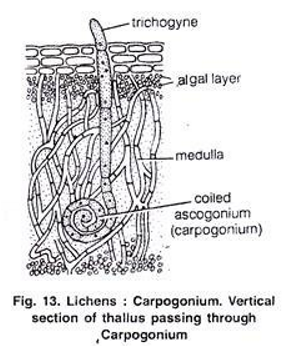
◉ Name: Carpogonium
◉ Parts:
◈ Ascogonium: Lower coiled portion
◈ Trichogyne: Upper elongated receptive portion projecting through the upper cortex
❖ Fertilization:
- Spermatium reaches and attaches to the trichogyne
- Male nucleus passes into the carpogonium
- Fertilization occurs
- Ascogenous hyphae develop
- A fungal fruiting body is formed
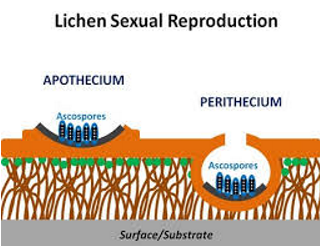
❖ Fruiting Bodies:
Table 1: Fruiting Bodies in Lichens
Type | Shape |
|---|---|
Apothecium | Cup-shaped or disc-shaped |
Perithecium | Flask-shaped |
Q1.
A group of algal cells surrounded or imprisoned by fungal mycelium and serving in vegetative multiplication of a lichen is called:
📚
ECONOMIC IMPORTANCE
▢ Food and Fodder:
❖ Nutritional Feature: Many lichens are rich in carbohydrates
❖ Examples:
◉ Cladonia: Food for reindeer
◉ Cetraria islandica: Edible Iceland moss
▢ Dyes and Indicators:
❖ Litmus:
◉ Source: Roccella tinctoria
◉ Use: Acid-base indicator
▢ Medicinal Importance:
❖ Lichenin: Substance associated with medicinal properties of some lichens
Table 1: Medicinal Uses of Lichens
Lichen | Traditional Use or Importance |
|---|---|
Usnea | Source of broad-spectrum antibiotic usnic acid |
Lobaria |
|
Xanthoria | Traditionally used for jaundice |
Parmelia | Traditionally used for epilepsy |
Peltigera | Traditionally used for hydrophobia |
Cladonia | Traditionally used for whooping cough |
Cetraria | Traditionally used for diabetes |
▢ Perfumery and Cosmetics:
❖ Uses:
- •Soaps
- •Cosmetics
- •Perfumes
❖ Sweet-Scented Lichens:
- •Evernia
- •Ramalina
▢ Ecological Importance:
❖ Pioneer Organisms: Lichens are pioneers of vegetation on bare rocks and initiate lithosere succession
❖ Rock Weathering:
- •Secrete acids that dissolve rock minerals
- •Trap dust and organic matter
- •Promote soil formation
- •Prepare the habitat for mosses and higher plants
❖ Xerosere:
◉ Definition: Ecological succession beginning in a dry habitat
◉ Pioneer Stage: Crustose lichens
◉ Sequence:
❖ Pollution Monitoring: Used as biological indicators of air pollution, particularly sulphur dioxide pollution
❖ Radioactive Monitoring: Accumulate radioactive substances and may be used for environmental monitoring
▢ Poisonous Lichens:
- •Cetraria juniperina
- •Letharia vulpina — wolf moss
📚
IMPORTANT EXAMPLES
Table 1: Important Lichens and Their Significance
Lichen | Type or Common Name | Importance |
|---|---|---|
Parmelia | Foliose; rock flower |
|
Peltigera | Foliose; dog lichen | Traditional remedy for hydrophobia |
Usnea | Fruticose; old man's beard | Source of usnic acid |
Cladonia | Fruticose; reindeer moss |
|
Cetraria | Fruticose; Iceland moss |
|
Roccella tinctoria | Dye-producing lichen | Source of litmus |
Lobaria | Lungwort |
|
Xanthoria | Yellow-coloured lichen | Traditional remedy for jaundice |
Evernia | Sweet-scented lichen | Perfumes, cosmetics and soaps |
Ramalina | Sweet-scented lichen | Perfumes, cosmetics and soaps |
Racodium | Filamentous lichen | Example of filamentous thallus |
High-Yield Points
❖ Phycobiont: Algal component
❖ Mycobiont: Fungal component
❖ Most Common Association: Green alga + Ascomycete fungus
❖ Air-Pollution Indicator:
❖ Pioneer of Lithosere: Crustose lichens
❖ Vegetative Propagule: Soredium = algal cells surrounded by fungal hyphae
❖ Broad-Spectrum Antibiotic: Usnic acid from Usnea
❖ Litmus Source: Roccella tinctoria
❖ Reindeer Food: Cladonia
❖ Iceland Moss: Cetraria
❖ Dog Lichen: Peltigera
❖ Rock Flower: Parmelia
❖ Old Man's Beard: Usnea
Q1.
Lichens are ecologically important because [MOE 2061]
📅MOE 2061
Q2.
The mode of life of lichen is: [MOE 2058]
📅MOE 2058
Q3.
Which of the following is a composite dual organism? [MOE 2063]
📅MOE 2063
Q4.
Usnea is a [IOM 2004]
📅IOM 2004
Q5.
Which is wrong about lichens? [BPKIHS 2002]
📅BPKIHS 2002
Q6.
Organism which are indicator of SO2 pollution in air are [IE 2003)
📅IE 2003)
Q7.
Lichens are indicator of: [BPKIHS - 2010)
📅BPKIHS - 2010)
Q8.
Which one of the following is a fructose lichen? [MOE 2013)
📅MOE 2013)
Q9.
Lichen is association of [MOE 2010)
📅MOE 2010)