📚
PLANT PHYSIOLOGY / PHYTOPHYSIOLOGY
▢ Father: Stephen Hales
▢ Definition: Science of life processes + functioning of plant cells, tissues, organs and whole plant
▢ Includes:
Table 1: Processes in plant physiology
Category | Processes |
|---|---|
Physical processes | Diffusion, osmosis, plasmolysis, imbibition, absorption, ascent of sap, transpiration, guttation |
Physico-chemical processes | Respiration, photosynthesis, photorespiration |
Special processes | Hormone role, movement, seed germination, vernalization |
📚
DIFFUSION
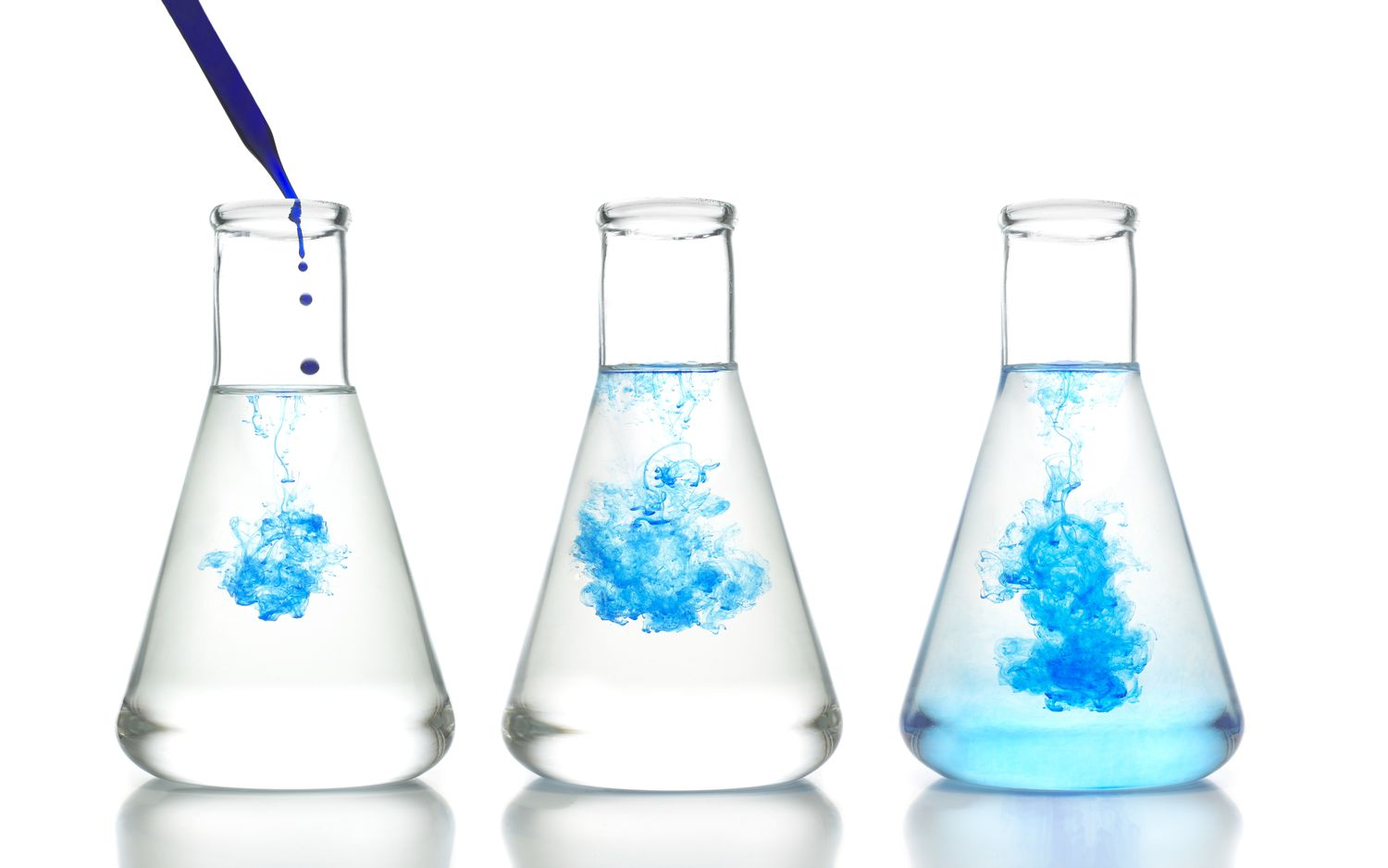
▢ Definition: Movement of ions/free atoms/molecules/particles from higher concentration to lower concentration along concentration gradient until uniform distribution
▢ Nature:
- •Passive process
- •Particle movement due to kinetic energy
▢ Regions:
Table 1: Diffusion regions
Component | Type |
|---|---|
Diffusing particles | Solid / liquid / gas |
Diffusing medium | Liquid / gas |
▢ Diffusion Pressure:
- •Hypothetical term
- •Potential ability of solid/liquid/gas to diffuse
- •Pure solvent DP > solution DP
- •
- •Sugar solution DP < pure water DP
▢ Diffusion Pressure Deficit / DPD / Suction Pressure:
- •DPD = water absorbing capacity
- •
- •DPD = decrease in diffusion pressure of solution compared with pure solvent
- •DPD = 0 → no water absorption by cell / turgid cell
▢ Water Potential:
Table 1: Water potential
Point | Data |
|---|---|
Meaning | Free energy per mole of water molecule |
Symbol | |
Pure water | |
After solute addition | |
Relation | |
Unit | Bars |
Xylem cells of leaves |
▢ Rate of Diffusion:
Table 1: Factors affecting diffusion rate
Factor | Relation |
|---|---|
Diffusion pressure gradient | Directly proportional |
Temperature | |
Humidity | Inversely proportional |
Distance between diffusing particles | Inversely proportional |
Size of diffusing particle | Inversely proportional |
Density of diffusing particle | |
Density of medium |
Graham’s law: diffusion of gas > liquid > solid
▢ Q10: Temperature coefficient of diffusion = 1.2–1.3; most chemical reactions = 2–3
▢ Examples:
- •
- •Aroma of flowers → diffusion of volatile aromatic compounds
- •Particle movement in protoplasm
- •Passive mineral uptake
- •Mineral movement through semipermeable membrane = diffusion, not osmosis
- •Water movement from higher concentration to lower concentration without semipermeable membrane
- •Independent diffusion → simultaneous diffusion of two/more substances
- •Respiration + photosynthesis gaseous exchange; transpiration water vapour loss
- •Facilitated diffusion → dissolved substances through semipermeable membrane with carrier protein; e.g., fructose transport
▢ Note: Opening and closing of stomata involve osmosis, not diffusion
📚
OSMOSIS
▢ Types of Membrane: 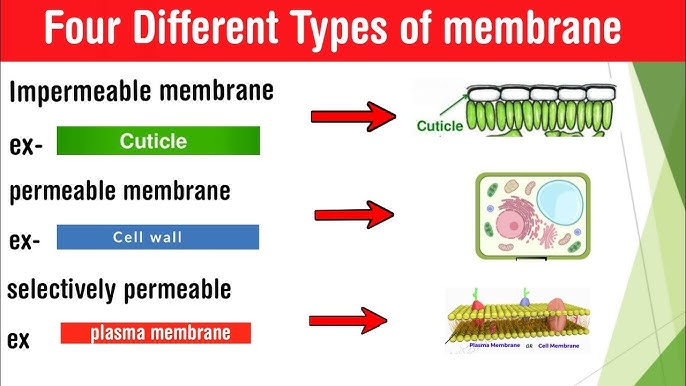
Table 1: Membrane types
Membrane | Permeability | Examples |
|---|---|---|
Permeable membrane | Allows all solutes + solvents | Cellulosic cell wall, lignified cell wall |
Selectively / differentially permeable membrane | Allows solvent + selected solutes | Living biological membranes, plasma membrane, tonoplast, organelle membranes |
Semipermeable membrane | Allows solvent only; no solute | Copper ferrocyanide membrane, collodion, parchment membrane |
Impermeable membrane | Allows neither solute nor solvent | Cutinized cell wall, suberinized cell wall |
▢ Definition:
- •Solvent movement from lower solute concentration to higher solute concentration through semipermeable membrane
- •Water diffusion from higher water concentration to lower water concentration through semipermeable membrane
- •Special type of diffusion; requires semipermeable membrane
▢ Continues Until: Hydrostatic pressure = osmotic pressure
▢ Requirements:
- Concentration difference
- Semipermeable membrane
▢ Direction of Osmosis:
- •Dilute solution → concentrated solution
- •Hypotonic → hypertonic
- •Low OP → high OP
- •Low DPD → high DPD
- •Higher water potential → lower water potential
- •Higher free energy → lower free energy
- •Turgid cell → flaccid cell from vacuole
- •Osmotically inactive solution → osmotically active solution
▢ Special Rules:
- •Osmosis absent in isotonic pressure
- •
- •Free energy of pure water = 0
- •Free energy of solution = negative
- •Osmotically inactive solution due to insoluble solute; e.g., starch in water
- •Only living tissue shows osmosis
- •Dead/boiled/alcohol-treated cells lose semipermeability
▢ Significance in Plants:
- •Water absorption
- •Turgidity of plant organs
- •Cell-to-cell water movement
- •Drought + frost resistance
- •Opening + closing of stomata
▢ Types of Solution:
Table 1: Hypotonic, isotonic and hypertonic solutions
Solution | Outer solution concentration | Effect on cell |
|---|---|---|
Hypotonic | Lower than cell sap | Water enters cell |
Isotonic | Equal to cell sap | No net water gain/loss |
Hypertonic | Higher than cell sap | Water leaves cell |
▢ Types of Osmosis:
Table 1: Endosmosis vs exosmosis
Feature | Endosmosis | Exosmosis |
|---|---|---|
Solvent movement | Surrounding solution → cell | Cell → surrounding solution |
Result | Turgidity | Flaccidity |
▢ Special Points:
- •Turgidity maintained by osmotic pressure
- •Cell growth maintained by turgor pressure
▢ Osmosis Involved In:
- •Absorption of water
- •Cell-to-cell water movement
- •Stomatal movement
- •Turgid guard cell → stomata open
- •Flaccid guard cell → stomata close
- •Growth of plumule + radicle during germination
- •Maintenance of form + structure of organs
- •Leaf movement in Mimosa pudica / seismonastic movement
▢ Osmotic Pressure:
Table 1: Osmotic pressure
Point | Data |
|---|---|
Definition | Pressure required in opposite direction to stop solvent entry through semipermeable membrane |
Cause | Presence of solute particles |
Relation | |
Pure solvent | OP = 0 |
Solution | OP positive |
▢ Turgor Pressure:
- •Pressure developed due to osmotic entry of water against rigid cell wall
- •Hydrostatic pressure
- •Keeps leaves + floral parts stretched
- •Cause of stomatal opening
- •Turgor movement → Mimosa pudica, Desmodium
▢ Wall Pressure:
- •Pressure exerted by rigid cell wall against expanding protoplasm
- •WP = inward pressure
- •
- •
▢ DPD, OP and TP Relationship:
Table 1: DPD relationships
Condition | Formula |
|---|---|
Normal cell | |
Using wall pressure | |
Fully turgid cell | |
Plasmolysed cell | |
Pure water |
❖ Notes:
- •DPD = resultant force for water movement
- •Water enters root from soil due to suction pressure / DPD
- •DPD = driving force of water absorption in roots
- •Normal cell → DPD positive
- •DPD never negative
- •Cell-to-cell water movement mainly depends on DPD / suction pressure
▢ RBC and Plant Cell MCQ Points:
Table 1: Pure water effects
Cell | Placed in pure water | Result |
|---|---|---|
Human RBC isotonic to 5% glucose | Burst → ghost RBC | |
Cabbage stem cell isotonic to 1% NaCl | Pure water | Does not burst due to rigid cell wall |
📚
PLASMOLYSIS
▢ Definition: Shrinkage of protoplast due to exosmosis when cell is placed in hypertonic solution
▢ Types:
Table 1: Types of plasmolysis
Type | Meaning |
|---|---|
Incipient plasmolysis | Protoplast just leaves cell wall |
Full plasmolysis | Complete shrinkage of protoplast |
▢ Helps Determine:
- •Permeable nature of cell wall
- •Semipermeable nature of cell membrane
- •OP of cell
- •Living/dead nature of unknown cell
- •Quickest physiological test for living/dead cell
▢ Special Points:
- •Plasmolysis not possible in dead cell
- •In plasmolysed/flaccid cell, space between wall and membrane filled by outer solution
- •No wrinkling of cell wall during plasmolysis because hypertonic solution fills the space
▢ Applications:
- •Plants cannot survive in excessive fertilizer area
- •Bacteria cannot survive in salted pickles
- •Salt spread in tennis court kills weeds
▢ Deplasmolysis: Plasmolysed cell regains normal condition in hypotonic solution
▢ Plasmoptysis: Bursting of cell in pure solvent/dilute medium
📚
IMBIBITION
▢ Definition: Surface phenomenon: solvent adsorbed on particle surface without solution formation → swelling
▢ Mechanism: Water movement into imbibant by diffusion + capillary action
▢ Terms:
Table 1: Imbibition terms
Term | Meaning |
|---|---|
Imbibate | Solvent adsorbed |
Imbibant | Substance adsorbing solvent |
▢ Good Imbibants:
- •Solid substances with hydrophilic colloids
- •Seed coat
- •Cell wall
- •Wood / woody tissue
- •Velamen tissue
▢ Examples:
- •Dry seeds swell in water
- •First physiological process during seed germination
- •Water absorption by root hairs starts with imbibition
- •Seed germination accompanied by heat evolution
- •Wooden doors swell in rainy season
- •Wooden pieces in rock crevices can rupture rock by imbibition pressure
- •
- •Rubber does not imbibe water; imbibes ether/kerosene/organic solvents
▢ Effects:
- •Volume of imbibant increases
- •Pressure exerted
- •Heat released → exothermic
- •Temperature increase → imbibition increases
▢ Formula:
▢ Special Points:
- •Affinity between imbibant and liquid is necessary
- •Wood + water → swelling; wood + ether → no swelling
- •Rubber + water → no imbibition; rubber + ether → imbibition
- •First step = adsorption
- •Adsorption = colloid property
- •Wood is good imbibant due to proteins + cellulose + starch
- •Capacity: Agar > Pectin > Protein > Starch > Cellulose
- •No imbibition in waxy substances e.g., cutin
📚
ABSORPTION OF WATER
▢ Definition: Movement of water from soil to xylem of roots
▢ Processes Involved:
- Imbibition
- Osmosis
- Diffusion
- Capillary action
▢ Site:
- •Root hair zone / maturation zone
- •Root cap has no role → no root hairs
- •Water absorbed by root hairs when external medium is hypotonic
▢ Root Hair vs Lateral Root:
Table 1: Root hair vs lateral root
Feature | Root hair | Lateral root |
|---|---|---|
Origin | Exogenous | Endogenous |
Cellularity | Unicellular | Multicellular |
Arises from | Epiblema / epidermis | Pericycle |
▢ Water Sources in Soil:
Table 1: Soil water types
Term | Meaning |
|---|---|
Main source | Rain water |
Most easily available | Capillary water |
Hardly available | Gravitational water |
Completely unavailable | Hygroscopic water |
Holard | Total water content in soil |
Chesard | Water available to plants |
Echard | Water unavailable to plants |
▢ Root Hair Special Points:
- •Acts as osmotic system
- •More developed in herbs than shrubs/trees
- •More developed in angiosperms than gymnosperms
- •Gymnosperms often have mycorrhiza
- •Cell wall permeable
- •Outer layer → pectin for soil-particle attachment
- •Inner layer → cellulose
▢ Absorption in Different Plants:
Table 1: Water absorption organs
Plant group | Absorbing structure |
|---|---|
Thallophytes / algae + fungi | General body surface |
Hydrophytes | General body surface |
Lichens | Rhizines |
Marchantia | Unicellular rhizoids |
Moss / Funaria | Multicellular rhizoids |
Fern gametophyte / prothallus | Unicellular rhizoids |
Fern sporophyte | Fibrous/adventitious roots |
Pinus | Mycorrhizal roots |
Higher plants | Root hairs |
Parasitic plants | Haustorial roots |
Root hairs absent in mycorrhizic, parasitic and hydrophytic roots
▢ Pathway: Soil → root hair → cortex → endodermis/passage cell → pericycle → protoxylem → metaxylem
▢ Mechanism:
Table 1: Passive vs active water absorption
Feature | Passive absorption | Active absorption |
|---|---|---|
Driving force | Transpiration; through DPD gradient | Root pressure; against DPD gradient / non-osmotic |
ATP | Not required | Required |
Respiration | Unaffected | Increases |
Oxygen | Not affected by oxygen level | Oxygen needed |
Gradient | Along osmotic/concentration gradient | Against concentration gradient |
Time | Day; transpiration active | Usually night; transpiration stopped |
Associated with | Transpiration | Bleeding + guttation |
Role | Root passive; shoot active | Root active; shoot passive |
Contribution | >90% | <10% |
Path | Apoplast + symplast | Symplast |
Speed | Rapid | Slower |
Phrase | Water absorption through roots | Water absorption by roots |
▢ Active Absorption Types:
Table 1: Active absorption types
Type | Mechanism |
|---|---|
Osmotic active absorption | According to osmotic gradient without ATP |
Non-osmotic active absorption | Against osmotic gradient using ATP |
▢ Apoplast and Symplast:
Table 1: Water movement systems
System | Path | Nature |
|---|---|---|
Apoplast | Cell walls + intercellular spaces | Non-living |
Symplast | Protoplasm + plasmodesmata | Living |
▢ Rate of Water Absorption:
- •Decreases at very low and very high temperature
- •
- •Decreases in saline soil / physiologically dry soil
- •Decreases in poorly aerated soil
- •Decreases in waterlogged soil
- •Directly proportional to transpiration
▢ Physiologically Dry Soil: Water present but plant cannot absorb due to dissolved salts
📚
ABSORPTION OF MINERALS
▢ Basic Points:
- •Independent of water absorption
- •Mostly through zone of elongation, not root hair zone
- •Mineral salt absorption directly by epiblema cells, not root hairs
- •Minerals absorbed as ions: cations/anions in soil solution
- •First step → ion exchange
- •Transport path → xylem
▢ Methods:
Table 1: Passive vs active mineral absorption
Feature | Passive absorption | Active absorption |
|---|---|---|
Gradient | Along concentration gradient | Against concentration gradient |
ATP | Not used | Used |
Nature | Spontaneous; towards equilibrium | Non-spontaneous |
Main concepts | Donnan equilibrium, ion exchange, mass/bulk flow | Carrier concept, Landegardh cytochrome pump theory |
▢ Passive Concepts:
Table 1: Passive mineral absorption concepts
Concept | Scientist | Meaning |
|---|---|---|
Donnan equilibrium | Entry of anions + cations across membrane to maintain electrochemical equilibrium | |
Ion exchange | Jenny and Overstreet | Exchange of ions adsorbed on root surface with similarly charged ions in soil solution |
Contact exchange | Ion exchange type | |
Carbonic acid exchange | Ion exchange type | |
Mass flow / bulk flow | Kramer | Mineral absorption with mass flow of water under transpiration pull |
▢ Active Concepts:
Table 1: Active mineral absorption concepts
Concept | Scientist | Meaning |
|---|---|---|
Carrier concept | Van den Honert | Carrier molecules form carrier-ion complexes |
Carrier molecules | Proteinaceous; located on plasma membrane | |
Landegardh cytochrome pump theory | Landegardh | Anions actively absorbed through cytochrome; cations passively absorbed to maintain electrochemical balance |
▢ Factors Affecting Mineral Salt Absorption:
Table 1: Factors
Factor | Effect |
|---|---|
Temperature | Increase → absorption increases; very high temperature → decreases due to protein carrier denaturation |
pH | Low pH → anion absorption increases; high pH → cation absorption increases |
Low oxygen → active absorption decreases | |
Ageing | Older roots → absorption decreases due to suberization |
📚
ASCENT OF SAP
▢ Definition: Upward movement of water with dissolved minerals through xylem vessel lumen against gravity
▢ Path in Gymnosperms: Tracheids
▢ Best Experiment:
Table 1: Ringing / girdling experiment
Point | Data |
|---|---|
Meaning | Removal of bark as complete ring |
Shows | Path of ascent of sap |
Not applicable in | Bicollateral, amphivasal and scattered vascular bundles |
▢ Theories:
❖ Vital Theories:
Table 1: Vital theories
Theory | Scientist | Path / Concept | |
|---|---|---|---|
Relay pump theory | Godlewski | Through xylem parenchyma | 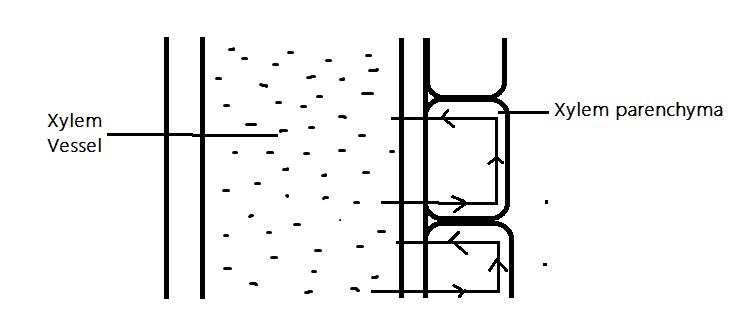 |
Pulsation theory | J. C. Bose | Through innermost cortical cells | 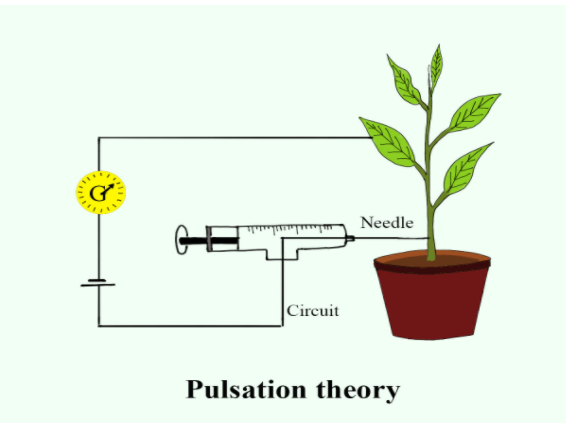 |
Discarded by | Strasburger | Living cells not responsible for ascent of sap |
❖ Root Pressure Theory: 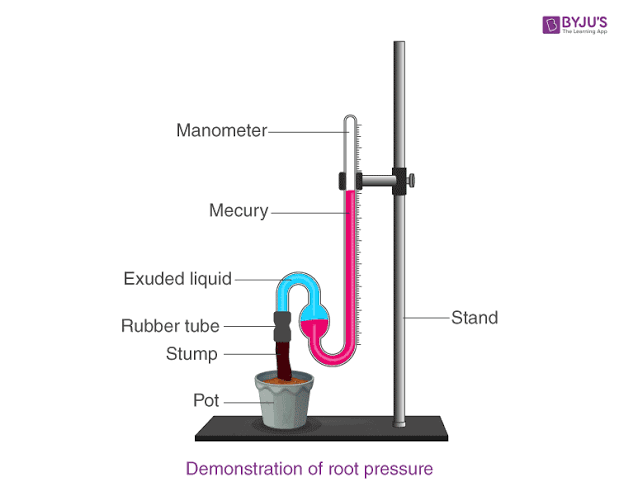
Table 1: Root pressure theory
Point | Data |
|---|---|
Given by | Priestley |
Concept | Hydrostatic pressure in root due to absorbed water accumulation → ascent of sap |
❖ Physical Force Theories:
Table 1: Physical force theories
Theory | Scientist | Concept |
|---|---|---|
Atmospheric pressure theory | Boehm | Atmospheric pressure raises water to fill vacuum from evaporation |
Imbibition theory | Unger; supported by Sachs | Water moves upward through thick walls of xylem cells + sclerenchyma cells of phloem by imbibition |
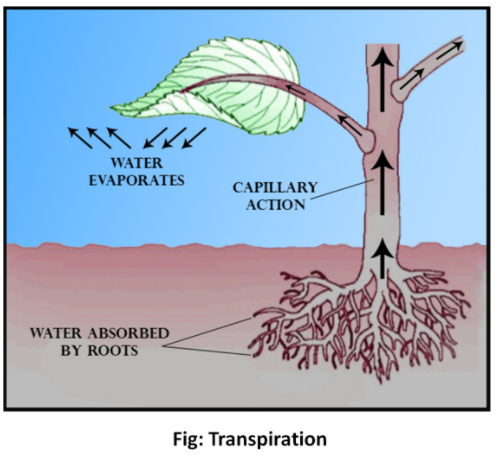
Transpiration pull / cohesion-tension theory | Dixon and Jolly | Most accepted; based on cohesion + adhesion of water |
▢ Cohesion-Tension Theory:
- •Most convincing / most widely accepted
- •Operates only in passive water absorption
- •Based on cohesive + adhesive properties of water
- •Transpiration necessary for ascent of sap
📚
TRANSPIRATION
▢ Definition: Loss of water vapour in pure form from aerial parts of plants
▢ Conditions:
- •Occurs when outer atmosphere has less moisture than substomatal cavities
- •Most rapid: low humidity + high temperature + turgid guard cells/open stomata + moist soil
- •Increases in hot, dry and windy conditions
- •Reduced by cutin deposition
- •Reduced when light intensity decreases
- •Does not occur from roots
- •Controlled phenomenon
▢ Importance:
- •Necessary for water + mineral absorption
- •Ascent of sap
- •Body temperature regulation / cooling effect
- •Curtis → transpiration is a necessary evil
- •
▢ Sites:
Table 1: Sites of transpiration
Site | Contribution | Note |
|---|---|---|
Stomata | Maximum | |
Cuticle | General body surface | |
Lenticel | Bark of woody trees |
▢ Leaf Surface:
- •Dorsiventral leaf → lower surface transpiration higher due to more stomata
- •Cobalt chloride test compares transpiration from two leaf surfaces
- •
- •
- •Lower surface changes blue → pink faster
▢ Experiments / Instruments:
Table 1: Transpiration tests
Test / Instrument | Use |
|---|---|
Bell jar experiment | Shows water vapour loss from aerial plant parts |
Ganong’s potometer | Measures rate of transpiration |
Cobalt chloride paper | Shows unequal transpiration in dorsiventral leaf |
▢ Mechanism:
- •Stomatal transpiration regulated by stomatal opening/closing
- •Opening/closing due to guard cell turgor pressure change
- •Transpiration through leaves → foliar transpiration
- •Transpiration through corky covering of stem → bark transpiration
▢ Transpiration vs Evaporation:
Table 1: Transpiration vs evaporation
Feature | Transpiration | Evaporation |
|---|---|---|
Nature | Physiological process | Physical process |
Surface | Living cells only | Living + non-living surfaces |
Path | Epidermis; mainly stomata | Free surface |
Forces | VP, TP, OP involved | No such forces |
Surface effect | Prevents drying / keeps surface wet | Causes dryness |
Temperature | Regulates plant body temperature | No regulation |
▢ Factors Affecting Transpiration:
❖ Internal / Plant Factors:
Table 1: Internal factors
Factor | Effect |
|---|---|
Root/shoot ratio | Higher ratio → higher transpiration |
Leaf area | More area → more transpiration |
Plant size per unit area | Smaller plants transpire more than larger plants |
Removal of leaves | Transpiration per unit area increases |
Cuticle | Thin cuticle → higher cuticular transpiration |
Stomatal number | More stomata/unit area → higher transpiration |
Sunken stomata | Reduce transpiration |
Leaf maturity | Maximum rate in mature leaf |
❖ External / Environmental Factors:
Table 1: External factors
Factor | Effect |
|---|---|
Light | Controls stomatal opening/closing; generally open in day, closed in dark |
Maximum stomatal opening | |
Opening after red light | |
Green / UV / far-red light | No stomatal opening |
Temperature | |
Relative humidity | Inversely proportional |
Low humidity | Increases transpiration |
Gentle wind | Increases transpiration by removing saturated air |
Violent wind | Decreases transpiration |
Soil condition | Affects transpiration through water absorption |
▢ Anti-transpirants:
- •Phenyl mercuric acetate / PMA
- •Abscisic acid / ABA
- •Salicylic acid
- •Aspirin
- •Waxy substances e.g., silicon emulsion
- •
▢ Significance:
- •Removes excess absorbed water
- •Maintains plant temperature
- •Produces suction force in leaves → ascent of sap
- •Ash + sugar content of fruits increases with transpiration
▢ Disadvantages:
- •High rate → wilting
- •Photosynthesis reduced
- •Growth stopped
- •Flower/fruit/seed production inhibited
📚
GUTTATION
▢ Cause: Root pressure
▢ Definition: Loss of liquid water droplets from leaf margin and tip; mainly margin
▢ Water Nature: Impure; contains dissolved minerals
▢ Function: Removal of excess water
▢ Structure:
Table 1: Hydathode
Point | Data |
|---|---|
Structure | Hydathodes / water stomata |
Position | Leaf margin + tip; mainly margin |
Epithem | Loosely arranged parenchyma in hydathode |
State | Always open |
▢ Time:
- •Early morning or night
- •Transpiration low + absorption high → root pressure increases
- •Not due to hydathode activity; due to root pressure
▢ Examples:
- •Water drops on leaf margins of Tropaeolum
- •Balsam
- •Grasses
- •Moist mesophytic herbs → tomato, balsam, cucurbita, Colocasia
▢ Nature: Uncontrolled phenomenon
▢ Transpiration vs Guttation:
Table 1: Transpiration vs guttation
Feature | Transpiration | Guttation |
|---|---|---|
Water form | Vapour | Liquid droplets |
Time | Daytime | Night / early morning |
Water type | Pure water | Impure water with minerals |
Path | Stomata, epidermis, cuticle, lenticels | Hydathodes |
Control | Controlled | Uncontrolled |
Temperature regulation | Present | Absent |
Water absorption | Helps | No role |
📚
EXUDATION / BLEEDING
▢ Exudation: Loss of water sap from incision of plant body parts
▢ Bleeding: Exudation of water from leaf incision
▢ Guttation: Exudation of water from leaf margin
📚
WILTING
▢ Definition: Loosening of plant part due to loss of turgidity
▢ Cause:
- •Transpiration > water absorption
- •Xylem blocked
- •Xylem removed
▢ PWC / PWP: Percentage of water left in soil when plant wilts = permanent wilting coefficient / permanent wilting percentage
▢ Sequence: Exosmosis → plasmolysis → temporary wilting → permanent wilting
▢ Types:
Table 1: Types of wilting
Type | Feature |
|---|---|
Incipient wilting | Not visible; partial loss of turgidity |
Temporary wilting | Hot days; transpiration high + absorption low; recovers at night; reversible |
Permanent wilting | Plant fails to recover; xylem vessels blocked; irreversible |
▢ Note: During wilting, cell wall wrinkles because water is lost without replacement
📚
STOMATA
▢ Definition: Minute pores on epidermis
▢ Number:
▢ Structure:
Table 1: Stomatal structure
Part | Feature |
|---|---|
Guard cells | Kidney-shaped in dicots; dumb-bell-shaped in monocots |
Thickest guard cell wall | Inner wall |
Subsidiary cells | Surrounding cells; support guard cell movement |
▢ Guard Cell Notes:
- •Specialized epidermal cells
- •Contain chloroplasts
- •Other epidermal cells usually lack chloroplasts
- •Guard cell chloroplasts show poor photosynthesis due to absence of RuBP carboxylase
- •PS-I and PS-II present
- •Crucifer type stomata → 3 subsidiary cells
- •Sunken stomata reduce transpiration
▢ Types Based on Distribution:
Table 1: Stomatal types by distribution
Type | Distribution | Example |
|---|---|---|
Apple / mulberry type | Only lower/dorsal surface | Trees |
Potato type | More on lower than upper surface | Most common; dorsiventral leaf |
Oat type | Equally on both surfaces | Isobilateral leaf, grasses |
Water lily type | Only upper surface | Free-floating hydrophytes |
Potamogeton type | Absent / vestigial | Submerged hydrophytes |
▢ Stomatal Behaviour Types:
Table 1: Stomatal behaviour
Type | Behaviour | Example |
|---|---|---|
Alfalfa type | Open during day; close at night | Thin-leaved mesophytes |
Barley type | Close at night; open for few hours in day | Most cereals |
Photoactive | Open in daytime | Usual plants |
Scotoactive | Open at night | Succulent xerophytes / CAM plants e.g., Opuntia, Bryophyllum |
▢ Opening and Closing:
Table 1: Stomatal state
State | Guard cell condition |
|---|---|
Stomata open | Guard cells turgid; OP + TP increase |
Stomata close | Guard cells flaccid |
▢ Starch-Sugar Hypothesis:
- •Proposed by Lloyd
- •Elaborated by Sayre and Steward
- •Depends on starch phosphorylase activity at different pH
- •High pH: starch → sugar → stomata open
- •Low pH: sugar → starch → stomata close
- •Starch to organic acid conversion required for stomatal opening
▢ Potassium Malate Theory / Active \(K^+\) Exchange:
▢ Status: Most accepted theory
▢ Given by: Fujino; modified by Levitt
▢ Day / Opening:
▢ Night / Closing:
▢ Special Points:
- •
- •
- •Opening = active process
- •Closing = passive process
- •Old stems + fruits transpire through lenticels
- •High altitude plants show xeromorphic adaptation
📚
MINERAL NUTRITION IN PLANTS
▢ Definition: Green plants take inorganic substances from soil as minerals/mineral nutrients to prepare organic food
▢ Ash Analysis:
- •About 92 mineral elements found in different plants
- •30 elements present in every plant
- •16 essential elements: C, H, O, N, P, S, K, Mg, Ca, Fe, Cu, B, Zn, Mn, Mo, Cl
▢ Essential Elements:
Table 1: Macro and micro elements
Type | Requirement | Elements |
|---|---|---|
Macro / major elements | Large amount | H, C, N, O, P, S, K, Mg, Ca |
Micro / minor / trace elements | Very small amount | Fe, Cu, B, Zn, Mn, Mo, Cl |
Elements with atomic number >20 are microelements except boron and chlorine
▢ Special Element Groups:
Table 1: Element groups
Group | Elements / Note |
|---|---|
Non-mineral elements | C, H, O |
C source | |
H source | |
O source | |
Tracer elements | |
Critical elements | N, P, K; usually deficient in soil; supplied as fertilizers |
Framework elements | C, H, O → carbohydrates → cell wall |
Protoplasmic elements | N, P, S with C, H, O → protoplasm |
Balancing elements | Ca, Mg, K → counteract toxicity by ion balancing |
▢ Additional Essential Elements in Some Plants:
Table 1: Additional elements
Element | Found in |
|---|---|
Silica | Grasses + diatoms |
Sodium | Algae + microbes |
Aluminium | Ferns + Lycopodium |
Iodine | Marine algae |
▢ Special Points:
- •Molybdenum = least required micronutrient
- •Nitrogen derived from mineral + non-mineral sources
▢ Roles of Elements:
Table 1: Specific roles and deficiency symptoms
Element | Absorbed as / Source | Role | Deficiency |
|---|---|---|---|
Nitrogen / N | Chief source: nitrates of Ca and K | Proteins, nucleic acids, vitamins, hormones, coenzymes, ATP | Stunted growth, lower respiration, chlorosis of older leaves, premature leaf fall |
Sulphur / S | Sulphates | Certain proteins, thiamine, biotin, CoA, ferredoxin | Chlorosis of younger leaves |
Phosphorus / P | Phosphate | Nucleic acids, cell membrane, certain proteins, nucleotides, phosphorylation reactions | Premature leaf fall |
Calcium / Ca | Nitrates + sulphates | Selective membrane permeability, enzyme activation, stem/root apex development, calcium pectate in middle lamella | Disintegration of growing meristem |
Magnesium / Mg | Chlorophyll constituent; ribosomal particle binding for protein synthesis | Chlorosis | |
Potassium / K | Nitrate + chloride | Photosynthesis, respiration, stomatal movement | Mottled chlorosis, growth inhibition |
Iron / Fe | Mostly ferrous form | Cytochrome; ETS, photosynthesis, respiration; chlorophyll synthesis | Chlorosis |
Boron / B | Borate | Food translocation | Death of shoot tip, suppressed flowering, stunted root growth, brown heart disease |
Manganese / Mn | Oxide | Enzyme activator in Krebs cycle; photolysis of water; chlorophyll + IAA synthesis; ETS reactions | Grey spots in leaves |
Zinc / Zn | Foliage absorption also | Tryptophan synthesis → IAA formation | Chlorosis of older leaves; Khaira disease of rice; white bud of maize |
Copper / Cu | Enzyme-related functions | Necrosis of tip of new leaves | |
Molybdenum / Mo | Nodulation in legumes | Fruit formation inhibition; whiptail disease of cauliflower | |
Chlorine / Cl | Wilting of leaf tip → chlorosis → necrosis | ||
▢ Liebig’s Law of Minimum: Crop yield determined by essential element present in minimum quantity relative to plant demand
📚
IMPORTANT INSTRUMENTS
Table 1: Instruments and measurements
Instrument | Measures / Demonstrates |
|---|---|
Osmoscope | Osmosis demonstration vessel; thistle funnel with egg membrane, potato osmoscope, egg osmoscope |
Osmometer | Osmotic pressure / osmosis |
Potometer | Rate of transpiration |
Porometer | Size of stomata / pore area of stomata |
Manometer | Root pressure |
Hygrometer | Relative humidity |
Psychrometer | Atmospheric humidity + amount of water transpired |
Tensiometer | Amount of water in soil |
Conductivity meter | Soil salinity |
Respirometer | Respiration |
Auxanometer | Plant growth |
Crescograph | Growth per second |
Clinostat | Inclination of curvature due to geotropism |
📚
READ AND DIGEST
- •Root hairs absorb water when solute concentration is higher in root hairs
- •In osmosis, outermost protoplasm layer acts as membrane, not whole protoplast
- •Fully turgid cell → suction pressure / DPD / water potential = 0
- •Plant cell in water takes water until DPD equalizes inside and outside
- •Cell wall permeability shown by movement of water + mineral salts from pericycle into tracheal elements
- •Purple cabbage leaves release colour in hot water because heat kills plasmalemma and makes it permeable
- •Excess chemical fertilizers kill crops due to exosmosis
- •During root water absorption, cell sap water potential is lower than pure water and soil solution
- •Mango in concentrated NaCl contracts
- •Cotton fibres absorb water by capillarity
- •Cut flowers dipped in dilute NaCl reduce transpiration
- •Leaves mainly perform photosynthesis + transpiration
- •Guard cells of land plants differ from other epidermal cells by having chloroplasts
- •Plant cells in distilled water become turgid
- •Water potential + osmotic potential of pure water = 0
- •Osmotic potential is negative
- •Water in plants moves from less negative to more negative gradient
- •Solute addition to pure water creates negative water potential
- •In girdled plant, root dies first
- •Tree girdled up to xylem may survive briefly but dies because sugar cannot move downward
- •Girdling not possible in sugarcane because vascular bundles scattered
- •Ringing/girdling experiment first performed by Hartig
- •Root pressure maximum when transpiration very low and absorption high
- •Cohesive force of water due to H-bonds / OH-bonds
- •Blotting paper absorbs water by capillary action
- •Sunken stomata occur in xerophytes
- •Frequency + position of stomata determined by porometer
- •Actual atmospheric water vapour content = absolute humidity
- •Cereal stomata opening for few hours in day = barley type
- •Thin-leaved mesophyte stomata open day + close night = alfalfa type
- •PMA reduces transpiration
- •Potassium involved in stomatal regulation
- •
- •Leaf water potential near zero/positive during guttation
- •Leafy twig of mesophyte in water demonstrates transpiration
- •Twig in salty water remains fresh longer due to decreased transpiration
- •Half leaves removed randomly → transpiration magnitude decreases but flux increases
- •PEP carboxylase connected with stomatal opening/closing
- •Transpiration highest when soil wet and air dry
- •Stomata open during day for gas exchange
- •Glycolate induces stomatal opening in presence of oxygen
- •Hydroponics = soilless cultivation of plants